
Last updated November 24, 2026
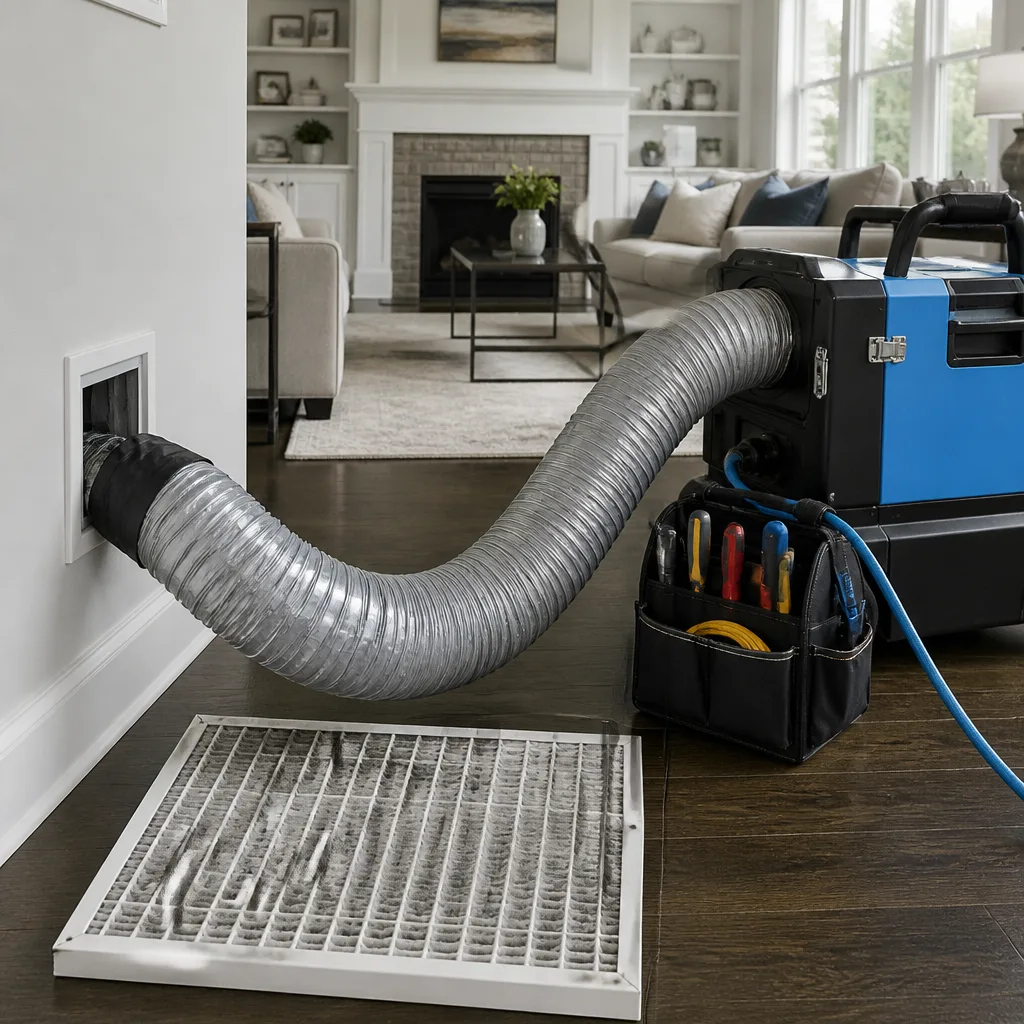 Whole-home duct cleaning
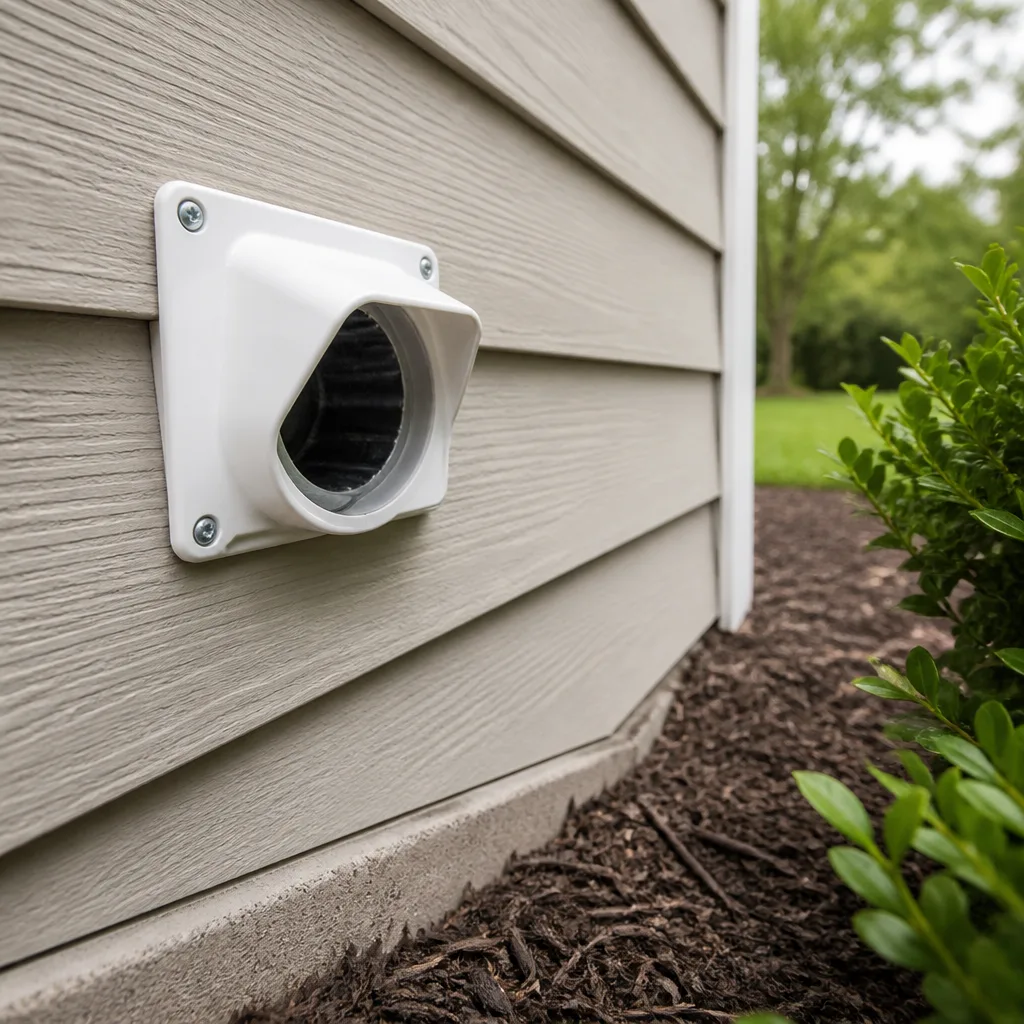 Dryer vent cleaning
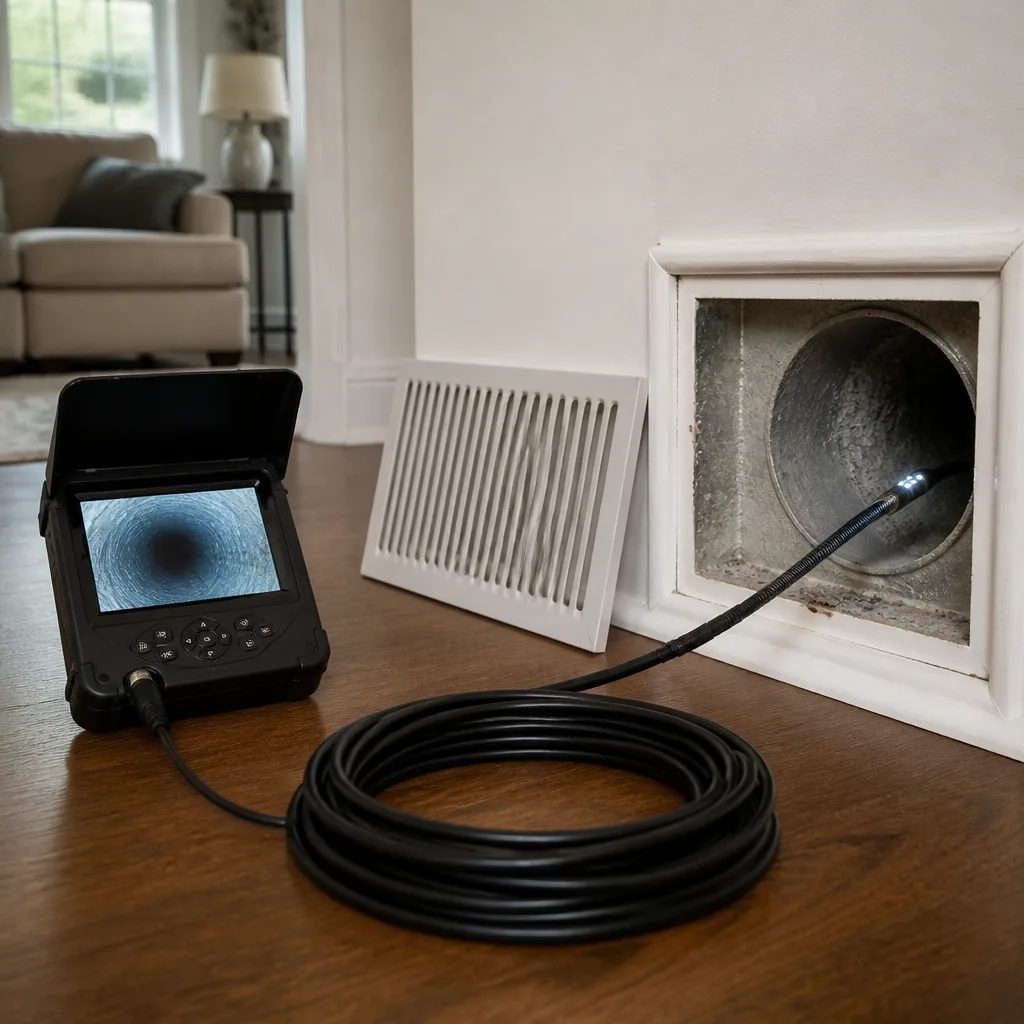 Camera inspection
 Sanitizing & deodorizing
Whole-system duct and dryer vent check with before-and-after photos - you see exactly what came out of your vents
That "$99 whole-house special" is a bait ad - the real number appears once they are in your hallway, or the "clean" is a shop-vac at the register. We photograph the inside of your ducts before and after instead.
Air Duct Cleaning Troubleshooting in Garden Grove: Common Problems and How to Fix Them
If your ducts were cleaned six months ago and the musty smell is back, the cleaning probably didn’t fail. The wrong problem was treated. Most of what homeowners describe as “bad air” or “dirty ducts” is really a set of specific, diagnosable conditions inside the duct system: moisture where it shouldn’t be, a leak pulling attic or garage air into the supply, a collapsed section of flex duct choking one room, or liner material breaking down and off-gassing. Each one has its own signature, and each one calls for a different service. This guide maps the symptoms you’re noticing in your Garden Grove home to the mechanical or biological cause behind them, so you can troubleshoot accurately before you call anyone.
Quick Answer
Air duct problems in Garden Grove usually trace back to one of four causes: moisture intrusion that feeds mold and musty odors, duct leaks and disconnected runs that cause uneven airflow, a dirty HVAC coil or blower that keeps re-contaminating clean ducts, or degraded duct liner that produces a chemical smell. The right fix depends on which one you’re dealing with. Cleaning alone solves contamination. Sealing, coil cleaning, or duct repair solves mechanical problems, and cleaning a leaky system just means it gets dirty again.
Styles & brands we work with
- Whole-home duct cleaning
- Dryer vent cleaning
- Camera inspection
- Sanitizing & deodorizing
Table of Contents
- Start Here: Mapping Your Symptom to a Cause
- Contamination Problems vs. Mechanical Problems: How to Tell Them Apart
- What Your Ducts’ Smell Is Telling You
- Why Some Rooms Stay Warm After Cleaning: Static Pressure Explained
- How Garden Grove Humidity Recontaminates Recently Cleaned Ducts
- When Cleaning Is the Wrong Service Entirely
- A Room-by-Room Troubleshooting Checklist
- The Duct Problem People Forget: The Dryer Vent
Start Here: Mapping Your Symptom to a Cause
Before you call anyone, write down what you’re actually experiencing. Vague complaints (“the air feels stale”) lead to vague solutions. Specific observations point straight at the cause. In our experience across Garden Grove homes, the symptom pattern almost always narrows the problem to one or two candidates before anyone opens a vent.
Work through this numbered sequence. It takes about fifteen minutes and it will make any conversation with a technician far more useful.
- Note where the symptom appears. One room only, one side of the house, or everywhere? A single room points to that run of duct. Whole-house symptoms point to the air handler, the main trunk, or the return.
- Note when it appears. Only when the system runs, only after rain, only in the morning, or constantly. Timing separates airflow problems from moisture problems.
- Describe the smell precisely. Musty, burning, chemical, or just “dusty.” Each points somewhere different, and we cover them in detail below.
- Check the filter. A clogged filter starves the system and mimics duct problems. Replace it and see if anything changes.
- Look at the vent faces. Dark streaking around a register means air is escaping at the boot rather than traveling through the duct, a classic leak signature.
- Listen at the return. A whistling or strained sound suggests restricted airflow somewhere in the system, often a crushed or disconnected flex run.
What you record here is the difference between a technician guessing and a technician diagnosing. If you’d rather have the full system assessed first, professional air duct cleaning in Garden Grove starts with exactly this kind of inspection, not with a vacuum.
Contamination Problems vs. Mechanical Problems: How to Tell Them Apart
This is the single most useful distinction in duct troubleshooting. Contamination is biological or particulate: dust, mold, biofilm, pet dander, debris. Mechanical is structural: leaks, disconnected joints, crushed flex duct, a failing air handler. The two produce different symptoms, and confusing them is why people clean their ducts and see the problem return.
Signs you’re dealing with contamination
- Odors that are present even when the system is off, or that intensify when it first kicks on
- Visible dust puffing from registers when airflow starts
- Dark staining or fuzzy growth at the register faces or inside the boot
- Allergy symptoms that worsen indoors and ease when you leave
- A musty or earthy smell that’s strongest in bathrooms and closets, where return air is often drawn
Signs you’re dealing with a mechanical problem
- Airflow that’s strong in some rooms and weak in others, regardless of cleaning
- A room that never reaches temperature no matter how long the system runs
- Whistling, rattling, or a strained blower sound
- Dust streaks on the ceiling or wall around a register
- Higher energy use with no change in comfort
- Air that smells like attic, garage, or outdoors, which means the system is pulling from the wrong place
Here in Garden Grove, the two often coexist. A leaky return in a garage or attic space pulls in unfiltered air, which then deposits dust in the ducts, which then feeds moisture-loving organisms once humidity rises. The contamination is real, but it’s a downstream result of the leak. Treat only the contamination and the leak keeps refilling the problem.
What Your Ducts’ Smell Is Telling You
The type of smell is diagnostic. Homeowners usually describe odors in general terms (“it smells weird”), but a more precise description can move a technician straight to the likely cause. Here’s how to read the three main profiles we run into in Garden Grove homes.
Musty or earthy: moisture intrusion
A musty smell means water is present somewhere in the duct system, the air handler, or the space the ducts pass through. It’s the smell of biological growth, and it won’t clear with cleaning alone if the moisture source remains. In Garden Grove homes, common entry points are condensation on cold duct surfaces during humid stretches, a roof or attic leak that drips onto ductwork, or a pan under the air handler that isn’t draining. The fix is to find and stop the moisture, then clean and sanitize. Cleaning without finding the source just resets the clock.
Burning or hot-dust smell: debris near the heat exchanger
A brief dusty smell when the heat first comes on for the season is normal. A persistent burning or hot smell is not, and it deserves prompt attention. Debris sitting against or near the heat exchanger will cook off and produce that odor, and a compromised heat exchanger is a safety concern. Turn the system off and get it looked at. This is also a fire-safety issue, so don’t dismiss it as an annoyance.
Chemical or “new plastic” smell: liner degradation
Some flexible duct and internal duct liner is made with materials that break down over time, especially in hot attics and after years of cycling. When that insulating liner degrades, it can off-gas and produce a faint chemical or plastic smell. This is a materials problem, not a dirt problem, and the answer is usually duct repair or replacement of the affected run. No amount of cleaning addresses a material that’s chemically breaking down.
If any of these descriptions match what you’re noticing, write it down before you call. The distinction between “smells like a damp basement” and “smells like burning dust” changes what happens next. When you’re ready for a full assessment, our team at Air Duct Cleaning Garden Grove Pros can help you identify what’s actually happening and what it takes to fix it.
Why Some Rooms Stay Warm After Cleaning: Static Pressure Explained
A homeowner has their ducts cleaned, and two weeks later the back bedroom is still warmer than the living room. They assume the cleaning was incomplete. It usually wasn’t. Uneven room temperatures after a professional cleaning point to a static pressure problem, which is a mechanical issue, not a dirt issue.
Static pressure is the resistance air meets as it travels through the duct system. When it’s too high, the blower can’t push enough air to the ends of the longest runs, so those rooms get under-delivered air. High static pressure has several common drivers:
- Undersized or restricted returns. If the return side can’t pull air in as fast as the supply side pushes it out, the whole system starves.
- Crushed or kinked flex duct. A single collapsed run in an attic can choke airflow to a whole branch of the system.
- Too many registers on a single run. A run that was sized for one vent but feeds three will under-deliver to all three.
- A dirty evaporator coil or blower wheel. Restrictions on the air handler side raise pressure across the whole system.
- Leaks and disconnected joints. Air escapes before it reaches the far rooms.
What this means for your next steps: cleaning removes what’s blocking airflow inside the ducts, but it can’t fix a system that was balanced wrong to begin with. If the room was always warm, cleaning won’t change it. If the room got worse recently, there’s a new restriction, likely a crushed or disconnected flex run. A professional HVAC cleaning inspection is the right starting point because it evaluates the coil, blower, and ductwork together. A blower wheel packed with dust, for example, is a very common cause of restricted airflow that a duct cleaner alone won’t touch.
What to check before calling about uneven rooms
- Confirm every register is fully open and unobstructed by furniture or rugs.
- Check the filter. A clogged filter is the cheapest cause of high static pressure.
- Verify the return grille isn’t blocked.
- Note which rooms are affected and whether the pattern is the same in heating and cooling.
- Mention any recent renovation, since new construction debris often ends up in ducts.
How Garden Grove Humidity Recontaminates Recently Cleaned Ducts
Garden Grove sits in Southern California’s coastal-influenced climate, where the marine layer pushes humid morning air inland and mornings often start damp before the sun burns it off. That daily swing has a specific effect on ducts. During cool, damp mornings, the internals of ducts stay cold. When warmer, moist air reaches those surfaces, condensation forms. Moisture inside a duct is exactly what biological growth needs, and it’s why some homes seem to “get dirty again” within a season of cleaning.
This is the recontamination cycle, and it’s the most commonly missed cause of recurring duct odors in Garden Grove homes. Cleaning removes existing growth, but if the system keeps condensing moisture on its own surfaces, the growth returns. Interrupting the cycle means addressing the moisture source. The access points worth checking are:
- The air handler pan and drain line. A partially clogged drain line keeps standing water near the system.
- The supply ducts inside the attic. In an unconditioned attic, the temperature swings are larger and condensation is more likely.
- Registers near bathrooms and the kitchen. High local humidity increases condensation right where return air is most often drawn.
- The duct insulation wrap. Missing or torn insulation lets the duct surface swing cold, then warm, which is the pattern that produces condensation.
- The return plenum. It’s often unsealed to a humid garage or crawlspace, letting in moist air directly.
If your ducts smell musty again a few months after cleaning, the moisture check is what to ask about. A proper inspection checks the pan, the drain, the insulation wrap, and the return connections. Our technicians use professional equipment from Rotobrush and Nikro for cleaning, and we follow up by looking at the moisture and filtration side, which is what actually keeps ducts clean. Systems with high-efficiency filtration, like Aprilaire or Honeywell components, also benefit from verifying that the filter is properly sized and seated. A replacement filter that’s the wrong size or has a gap around it does very little.
When Cleaning Is the Wrong Service Entirely
One of the more useful things a specialist can tell you is which service you don’t need. Here in Garden Grove, we regularly get calls from homeowners who’ve booked a cleaning, and an on-site inspection tells us cleaning is not the right answer. Here’s when a different service is the correct one.
Duct sealing is what you need when…
- Air is escaping at joints, boots, or collars, and registers are streaking dust onto walls.
- The system is pulling air from an attic, garage, or crawlspace. This is very common in homes where returns run through an unconditioned space.
- You’re paying for conditioned air that never reaches the rooms you’re trying to cool.
- Rooms near the air handler are fine and every distant room is weak.
Coil and HVAC cleaning is what you need when…
- Airflow is low but the ducts are clean. The restriction is likely on the air handler side.
- The coil is visible and caked with dust or fuzz. Growth on a coil will re-dirty an entire system.
- The blower wheel is packed. A loaded blower wheel is a common cause of low airflow and high static pressure.
Duct repair is what you need when…
- A flex run is crushed, kinked, or disconnected.
- The interior liner is degrading and producing a chemical smell.
- A duct has a visible hole or a bad joint that won’t seal.
Our full-system approach covers all of these together: cleaning, repair, sealing, sanitizing, and dryer vent safety. That matters because most real duct problems turn out to involve more than one of the five, and treating them piecemeal means paying for repeat visits. If you’re curious what a full-system inspection looks like, the overview on our Air Duct Cleaning Garden Grove Pros page is a good place to start.
A Room-by-Room Troubleshooting Checklist
A whole-house walkthrough takes about twenty minutes and gives you a real diagnostic picture. In Garden Grove homes, the room-by-room pattern is usually consistent: the same rooms show the same symptoms year after year unless something changes.
- Every register. Look at the face and the surrounding wall. Dark streaks mean leaking boots. Dust accumulation after a recent cleaning means the system is still dirty somewhere upstream.
- Every room. Write down which rooms feel stuffy, which stay warm, and which smell. Compare the return side air to the supply side. If the return smells worse, the problem is upstream of the air handler. If the supply smells worse, the problem is in the trunk or supply runs.
- The air handler closet. Without taking anything apart, look for standing water, rust, or water staining near the unit.
- Visible duct runs. In an attic or exposed chase, look for kinked or disconnected flex. Note the insulation condition. Torn wrap is a condensation source.
- Outdoor unit. Clear any blockage around the condenser fins and confirm the unit isn’t iced during operation.
- The filter. Check the size, fit, and seat. Look for dust bridging past the filter into the return.
Once that walkthrough is done, the picture is usually clear enough to say what type of service is needed. Cleaning solves contamination. Sealing solves leaks. Coil cleaning solves airflow restriction on the air handler side. Repair solves damaged runs, and sanitizing addresses biological growth after the source is removed. Do not open the air handler or any electrical panel yourself. The blower, the coil, and the wiring are for a trained technician, and we’d rather see you call than reach for a screwdriver. When the diagnosis points to cleaning, that’s when it’s worth talking to our team at Air Duct Cleaning Garden Grove Pros.
The Duct Problem People Forget: The Dryer Vent
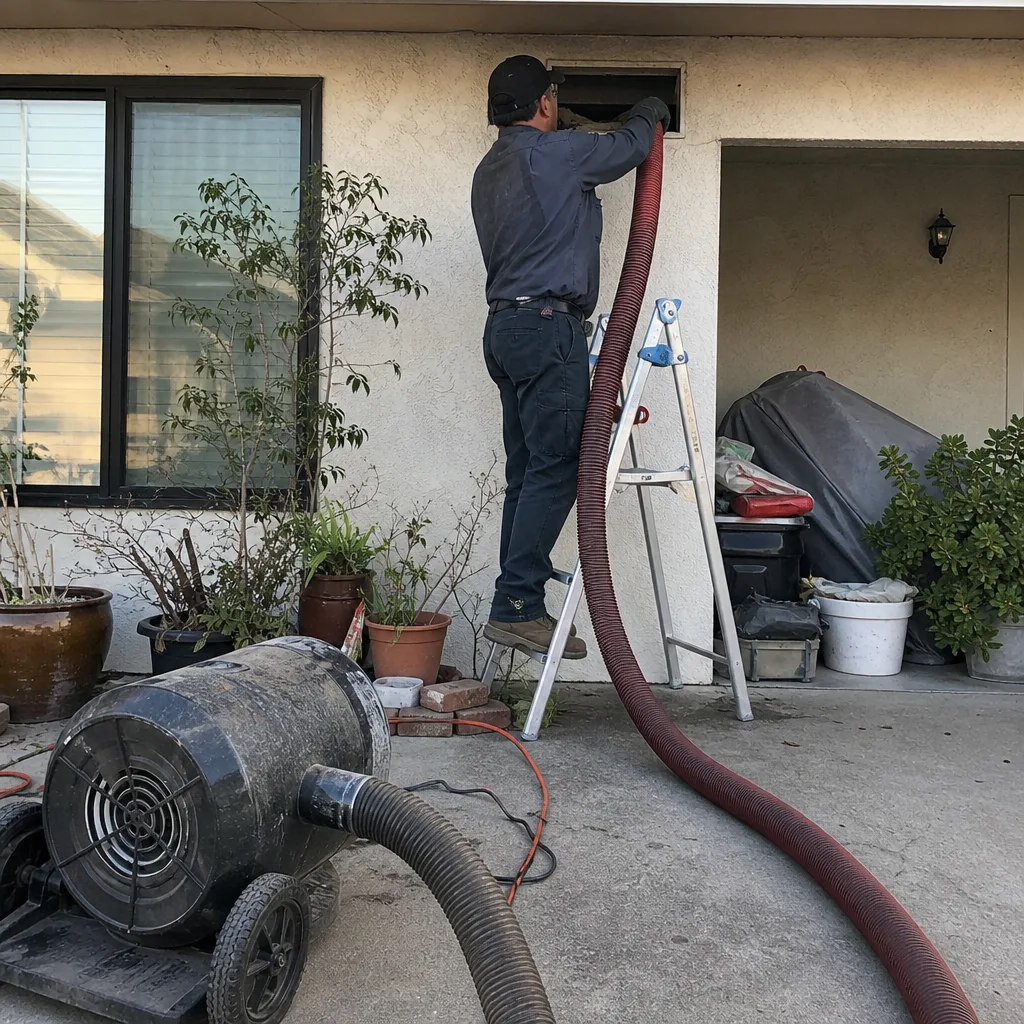
The dryer vent is technically ductwork, and it’s the one run in the house where lint buildup is a fire risk, not just an efficiency drag. Lint accumulates on the inside walls of the vent over time, and it’s highly combustible. A clogged dryer vent also makes the dryer run hotter and longer, which compounds the problem. This is why we treat dryer vent cleaning in Garden Grove as its own dedicated safety service rather than an upsell tacked onto a duct cleaning.
Signs your dryer vent is restricted include clothes that take longer than one cycle to dry, the dryer cabinet feeling hot to the touch, and a vent flapper that doesn’t open cleanly. A professional dryer vent cleaning inspects the full run, from the back of the dryer to the exterior termination. While the technician is there, they can confirm the vent terminates outside the building and isn’t hidden in a garage or under a deck. That’s a building safety issue that often goes unnoticed.
Common Mistakes to Avoid
- Cleaning before diagnosing. Cleaning ducts in a system with a mechanical problem just means the contamination returns. Diagnose first, then clean.
- Assuming a fresh smell means the problem is fixed. Airing out the house masks odors temporarily. If the musty smell returns after a few weeks, the moisture source is still there.
- Replacing the whole system instead of the leaking run. A single crushed or disconnected flex duct can often be repaired, and there’s no need to replace every run just because one is failing.
- Using the wrong filter size. A filter that doesn’t seat properly lets dust bypass it and re-dirty the ducts. Check that the filter fits the way it’s meant to.
- Ignoring the dryer vent. Many homeowners clean their ducts and skip the one run most associated with fire risk. It deserves the same attention.
- Buying a bigger air conditioner instead of addressing static pressure. Expanding the system doesn’t fix leaks or undersized returns; it just wastes energy.
- Writing off a burning smell as “dust burning off.” A persistent burning smell is a safety concern. Have it looked at.
See the difference
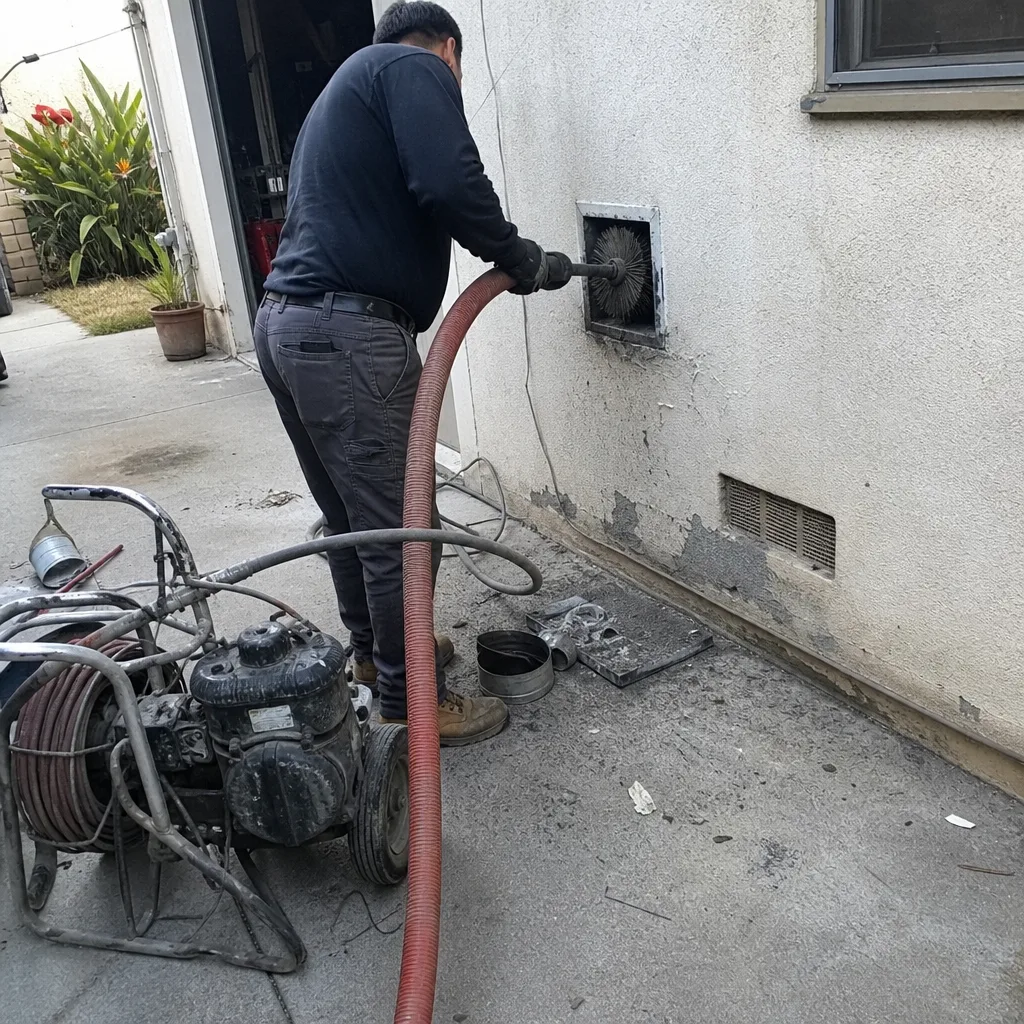 Before
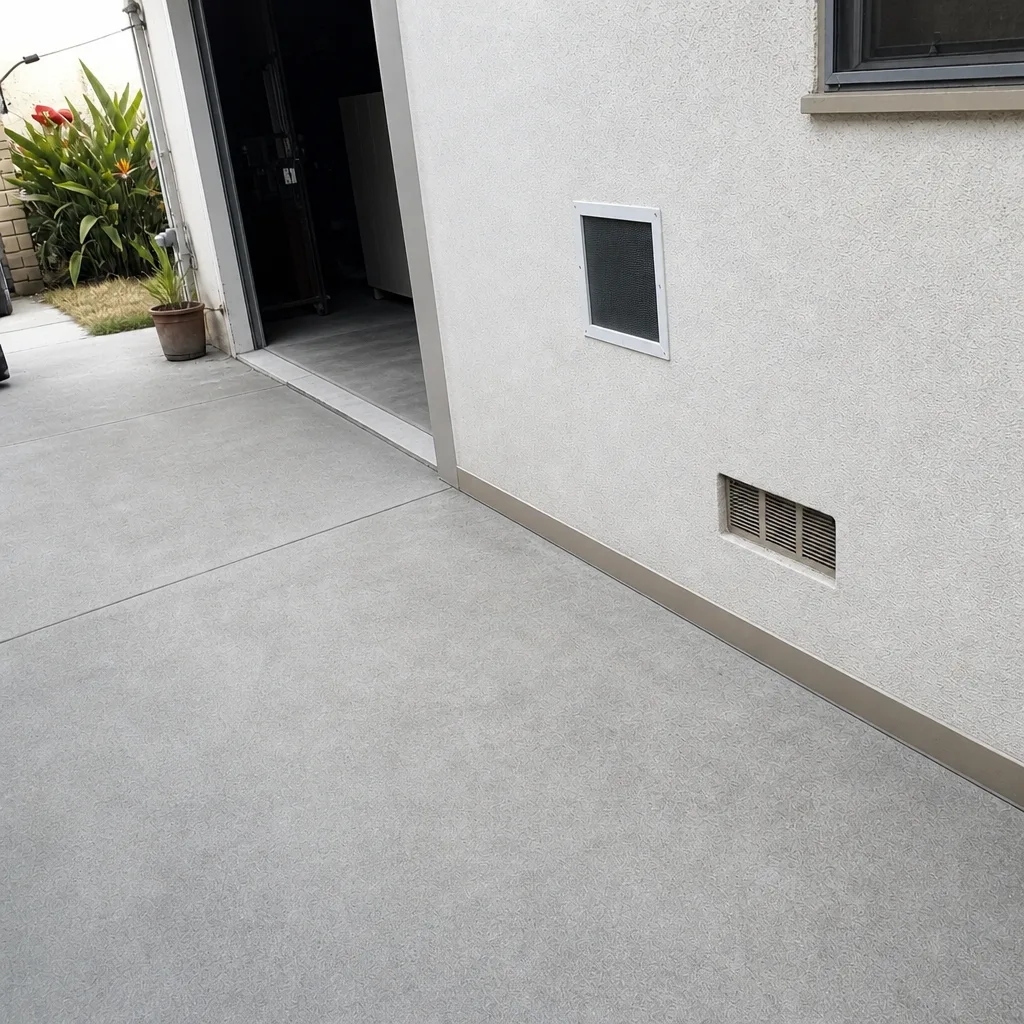 After
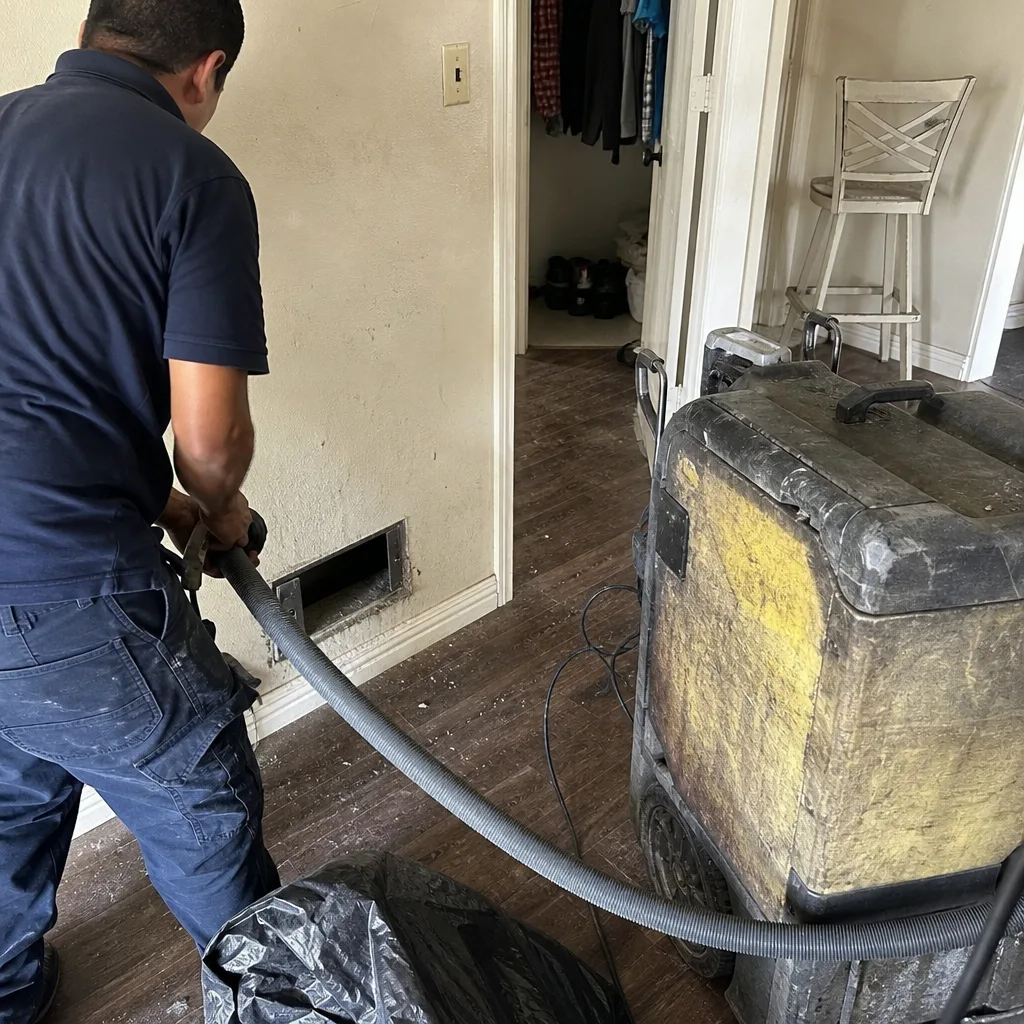 Before
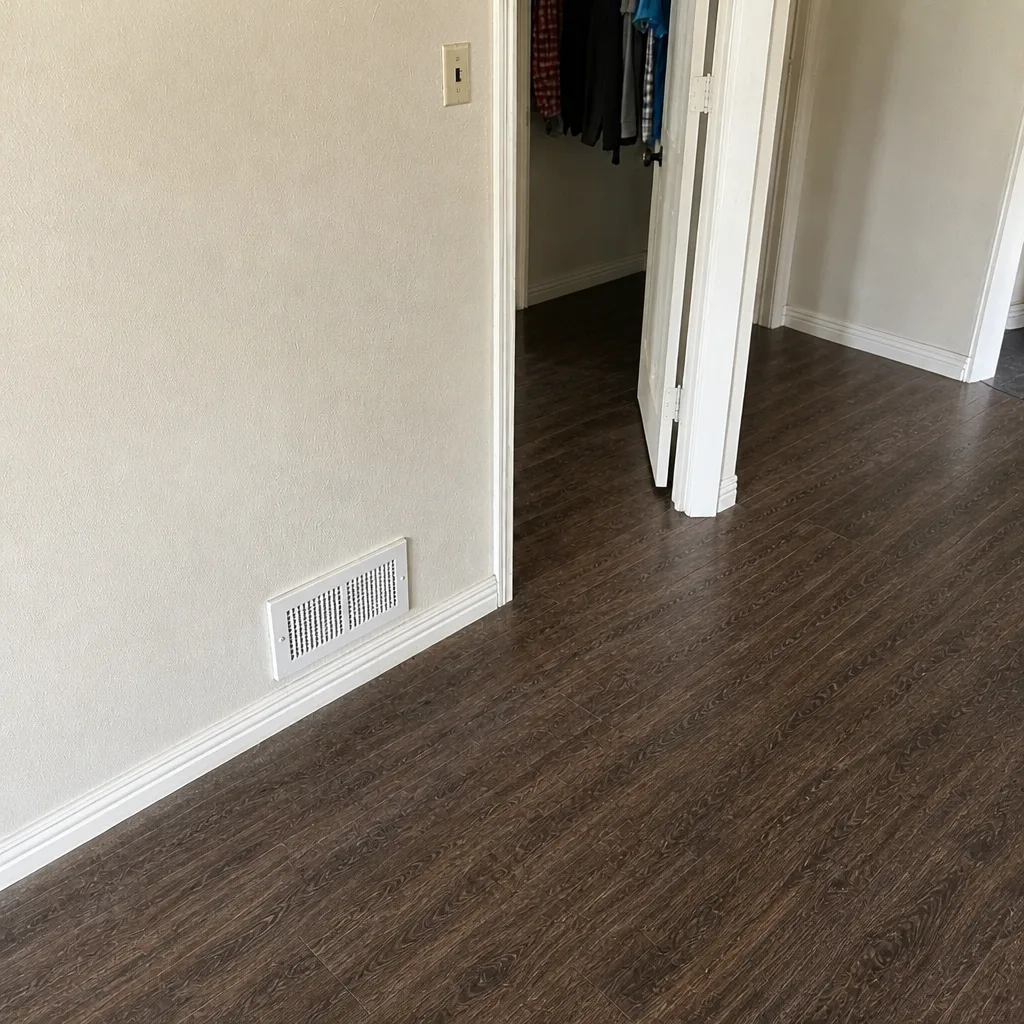 After
 Before
 After
When to Call a Professional
Call a professional when the symptom pattern you’ve identified points to more than cleaning can fix. Any persistent musty or burning odor, visible growth inside a register, a room that never reaches temperature, water near the air handler, or a dryer that takes two cycles to dry all justify an on-site inspection. Also call when symptoms return within a few months of cleaning, since that pattern almost always points to an untreated moisture or leak problem. There’s no benefit to guessing harder. A professional inspection runs through the mechanical, moisture, filtration, and cleaning questions together, so you know what to fix and in what order. If any of the descriptions in this guide sound like your home, it’s worth a conversation. Air Duct Cleaning Garden Grove Pros offers free estimates in Garden Grove. Call (877) 792-6315. Our technicians have up to 12 years of experience, and we work with professional equipment from Rotobrush, Nikro, Honeywell, Aprilaire, and Abatement Technologies. We answer 24/7. Fast dispatch from 7am to 7pm, Sunday through Friday.
Frequently Asked Questions
The musty smell means moisture and biological growth are still present somewhere in the system. Cleaning removes existing growth, but if the moisture source is untouched, it returns. Check the air handler pan, drain line, duct insulation wrap, and return connections in unconditioned spaces. Call (877) 792-6315 for an inspection that includes a moisture check; estimates are free.
Leaking ducts produce uneven airflow, dust streaks around register faces, and air that smells like attic or garage. Dirty ducts produce dust puffing from registers, musty odors, and allergy symptoms indoors. If the symptoms persist after cleaning, the problem is mechanical and needs sealing or repair. Call (877) 792-6315 to have it looked at; estimates are free.
That room is likely under-delivered air because of a static pressure problem, not leftover dirt. Common causes are a crushed flex run, a blocked return, too many vents on one run, or a dirty blower wheel. Cleaning won’t fix any of these. An HVAC cleaning inspection starts with the air handler side and is the right next step. Call (877) 792-6315 for an exact quote; estimates are free.
A brief dusty smell when the system first kicks on is normal. A persistent burning smell is not. It typically points to debris near the heat exchanger or a compromised component, and that’s a safety concern. Turn the system off and have it looked at. Call (877) 792-6315 for an inspection; estimates are free.
Yes. The area’s humid mornings cause condensation on cool duct surfaces, and moisture inside ducts supports biological growth. The cycle repeats throughout the warmer months, which is why ducts can smell musty again within a season of cleaning. Addressing the moisture source is what breaks the cycle. Call (877) 792-6315 for a moisture-and-cleaning inspection; estimates are free.
Most homes don’t need it on a fixed schedule. Cleaning is warranted when there’s visible growth, a musty smell that returns, recent renovation debris, or a system that’s never been cleaned and is showing symptoms. A home with a known moisture problem should be inspected more often than cleaned. Call (877) 792-6315 for an assessment of what your home actually needs; estimates are free.
The Bottom Line
Duct problems in Garden Grove are diagnosable. A musty smell points at moisture. A burning smell points at debris near the heat exchanger or a safety concern. A chemical smell points at liner degradation. Uneven room temperatures after cleaning point at static pressure, not leftover dirt. And a smell that comes back a few months after cleaning is the signature of an untreated leak or condensation cycle. The right fix depends on which category you’re in, so work through the symptom map, run the checklist, and then call for an inspection. Air Duct Cleaning Garden Grove Pros offers free estimates, and we can walk through the mechanical, moisture, and cleaning side together.
Call (877) 792-6315 for a free estimate. We answer 24/7. Fast dispatch from 7am to 7pm, Sunday through Friday.
Written by the team at Air Duct Cleaning Garden Grove Pros.