
Last updated November 24, 2026
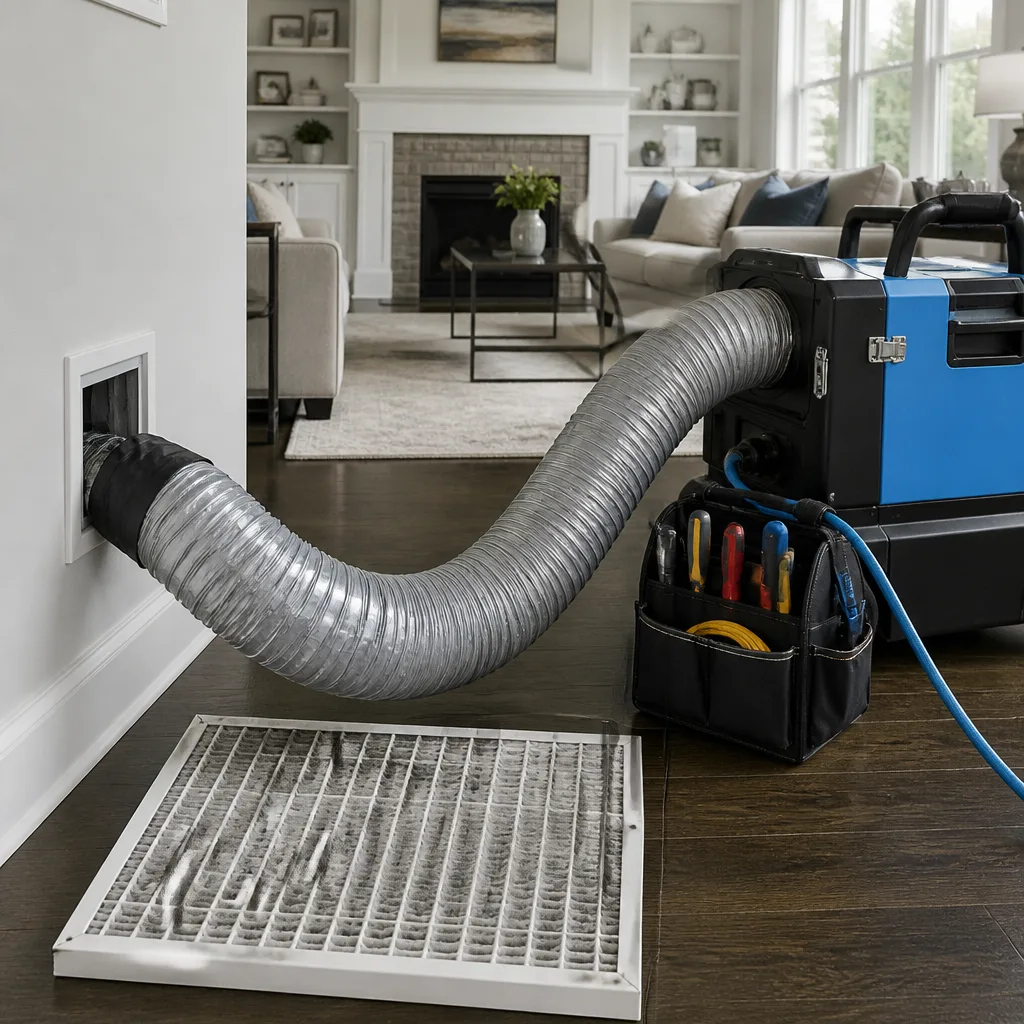 Whole-home duct cleaning
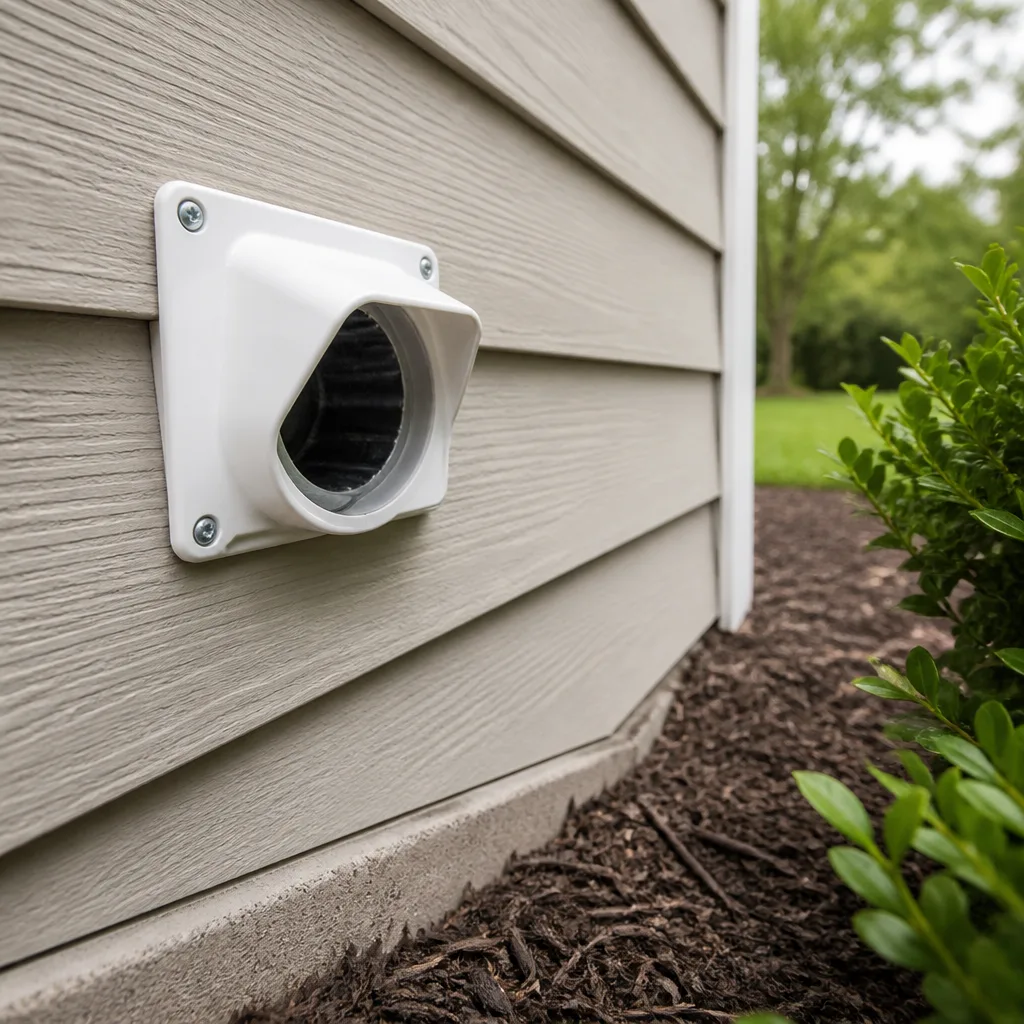 Dryer vent cleaning
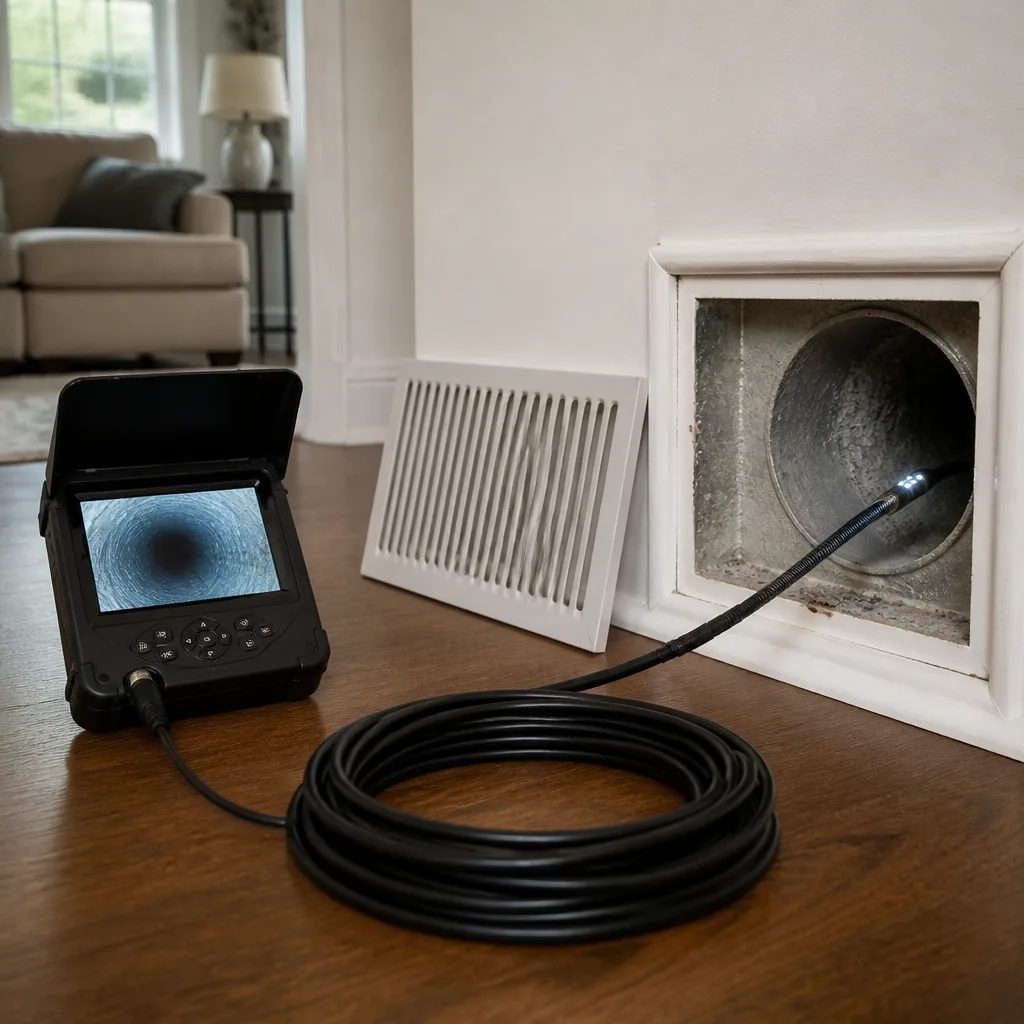 Camera inspection
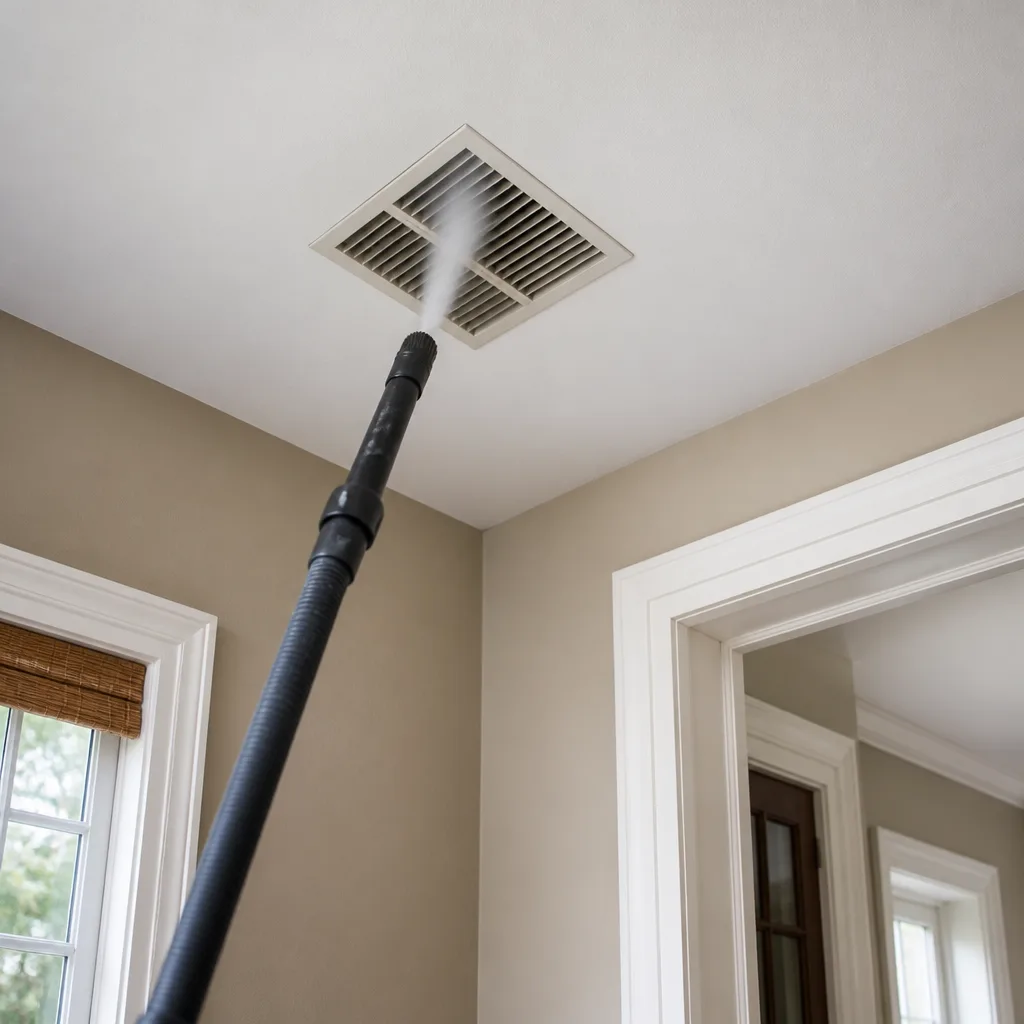 Sanitizing & deodorizing
Whole-system duct and dryer vent check with before-and-after photos - you see exactly what came out of your vents
That "$99 whole-house special" is a bait ad - the real number appears once they are in your hallway, or the "clean" is a shop-vac at the register. We photograph the inside of your ducts before and after instead.
Choosing the Right Air Duct Cleaning Brand: A Buyer’s Guide for Garden Grove
Most people shop for duct cleaning the way they shop for a haircut: they compare prices, glance at reviews, and pick whoever seems reasonable. That approach works fine for low-stakes services. It falls apart for duct cleaning, because the thing you’re actually paying for is the equipment in the technician’s hands, and that equipment is almost never mentioned in a quote. There are fewer than a dozen manufacturers whose tools meet the airflow and negative-pressure standards set by the National Air Duct Cleaners Association (NADCA). If a company can’t tell you the brand of their vacuum system or the tool they use to agitate debris, that silence is the answer. This guide shows you how to read an equipment list, compare air quality products by name, and judge whether a Garden Grove duct cleaning company has the tools and training to do the job right.
Quick Answer
The right duct cleaning brand in Garden Grove is the one that can name its vacuum system, its agitation equipment, and the filters and sanitizers it applies. Professional-grade tools from manufacturers like Rotobrush, Nikro, and Abatement Technologies aren’t sold in retail stores, so a company that owns them has invested in training that generic operators skip. Ask for specific model names, not vague descriptions, and treat a confident equipment answer as a stronger signal than any review count.
Styles & brands we work with
- Whole-home duct cleaning
- Dryer vent cleaning
- Camera inspection
- Sanitizing & deodorizing
Table of Contents
- What Professional Duct Cleaning Equipment Brands Actually Tell You
- Reading the Specs: Airflow, Negative Pressure, and HEPA Filtration
- Professional Air Quality Products vs. Generic Substitutes
- How to Ask a Company About Their Equipment and Read the Answer
- Why the Filter Brand Recommended After Service Matters in Garden Grove
- Equipment Investment and Business Legitimacy
- The Full-System Approach: Cleaning, Sealing, Sanitizing, and Dryer Vents
- What Makes Garden Grove Ducts Different
What Professional Duct Cleaning Equipment Brands Actually Tell You
A duct cleaning company’s equipment list is the closest thing you’ll get to a resume. Professional tools are expensive, specialized, and sold only through commercial channels. Consumer vacuums and shop vacs, on the other hand, are available to anyone with a credit card. The gap between those two categories is where most of the quality difference in this industry lives.
Here are the equipment categories that matter and the brands that dominate them:
- Agitation tools – Rotobrush makes rotary brush systems that whip through flex duct and sheet metal, loosening debris that suction alone would never lift. Nikro builds similar contact cleaning tools with different brush heads for different duct materials.
- High-powered vacuum and negative air machines – Abatement Technologies manufactures HEPA-filtered negative air units built for containment work. These are the tools contractors use when contaminant control is a real concern, not a marketing line.
- Filtration and air quality components – Honeywell and Aprilaire are the two names that come up most in residential HVAC filtration and purification. A technician who works with these systems understands how your ducts interact with your air handler, not just how to vacuum a tube.
In our experience, a company that owns a Rotobrush or Nikro system has spent real money on tools that only make sense if you’re doing volume work with repeat customers. That’s not a guarantee of quality, but it’s a much stronger signal than a five-star review from a neighbor who never looked inside their ducts. When you compare duct cleaning quotes in Garden Grove, ask what equipment the technician will bring. The answer should include brand names.
Reading the Specs: Airflow, Negative Pressure, and HEPA Filtration
The numbers behind professional duct cleaning equipment are not marketing fluff. They describe whether the machine can actually capture the debris it loosens. If a vacuum doesn’t move enough air and maintain negative pressure inside the duct system, loose dust escapes back into your living space. That defeats the purpose of the service.
Three specifications matter most:
- Airflow volume – Measured in cubic feet per minute (CFM), this tells you how much air the vacuum moves. Higher airflow keeps debris suspended so it travels to the collection unit instead of settling in a different part of the duct.
- Negative pressure – The duct system must be under continuous suction during cleaning. If pressure drops or reverses, contaminated air blows back into rooms. Professional units maintain negative pressure even while the agitation tool is running.
- HEPA filtration – HEPA filters capture particles at 0.3 microns with very high efficiency. Abatement Technologies builds HEPA negative air machines specifically for this kind of containment. A shop vac with a cheap bag filter doesn’t come close.
You don’t need to memorize the numbers. You do need to know that these specs exist and that they matter. A reputable company can explain, in plain English, why their vacuum holds pressure and their HEPA filtration captures fine particulate. An operator who only says “we have professional equipment” without naming it is telling you something. In a market with plenty of duct cleaning options around Garden Grove, the ones who can talk specs are usually the ones who own the machines.
Professional Air Quality Products vs. Generic Substitutes
Cleaning gets the debris out. What you put back in matters just as much. This is where a lot of duct cleaning companies cut corners, swapping professional-grade sanitizers and filtration components for generic products that cost less and do less.
Here’s what the name-brand products actually do:
- EPA-registered sanitizers – Applied inside the duct system after cleaning, these reduce microbial growth on duct surfaces. The key phrase is EPA-registered; generic fogging solutions often aren’t, and the difference matters for safety and efficacy.
- Honeywell and Aprilaire components – These brands make filtration and purification equipment that integrates with residential HVAC systems. A technician who knows these products can recommend the right filter depth and MERV rating for your air handler instead of guessing.
- Guardsman protective treatments – Applied as part of a sanitizing and air quality service, these coatings help keep duct interiors cleaner between services.
- Abatement Technologies HEPA machines – Used during cleaning to capture fine particulate before it can recirculate into your home.
The pattern to notice: every one of these products is a named brand with a defined function. Generic alternatives exist for all of them, and a company trying to protect margins will swap them in without saying so. When you ask about air quality and sanitizing, listen for brand names. If the answer is “we fog it with a sanitizer,” that’s not the same level of care.
You can read more about what a full sanitizing service involves on our Air Duct Cleaning Garden Grove Pros page. The short version: it’s a defined process with specific products, not a spray-and-go add-on.
How to Ask a Company About Their Equipment and Read the Answer
You don’t have to become a duct cleaning expert to screen a company. You need four good questions and a sense of what a strong answer sounds like. Ask these before you book, ideally on the phone while you’re comparing two or three quotes.
- “What brand of vacuum and agitation equipment will the technician bring?” A strong answer names specific brands, like Rotobrush or Nikro. A weak answer says “professional-grade equipment” without naming anything.
- “Does your vacuum maintain negative pressure inside the ducts during cleaning?” The answer should be a clear yes, ideally with a brief explanation of how the system stays sealed. Hesitation here is a red flag.
- “What filtration do you use on the collection unit?” Look for HEPA filtration, and for equipment brands like Abatement Technologies that are built for contaminant control.
- “What filter brand and MERV rating do you recommend for my air handler afterward?” A company that works with Honeywell or Aprilaire components will give you a specific, reasoned answer. A company that says “whatever fits” hasn’t thought about it.
The pattern behind these questions is simple. Specificity signals competence. A company with real tools and training will answer in brand names and technical terms without getting defensive. A company that’s faking it will pivot to price, or to how long they’ve been doing this, or to a guarantee that sounds good but means nothing. When we talk to homeowners in Garden Grove about their ducts, the equipment conversation usually tells us more about the job than any other part of the intake.
If you’d like to see how our air duct cleaning service lines up with these questions, the details are laid out there. Read it with the four questions above in hand.
Why the Filter Brand Recommended After Service Matters in Garden Grove
Filter recommendations are one of the most overlooked parts of a duct cleaning visit. A company can do a thorough job on the ducts and then recommend the wrong filter, and you’ll be back to dusty air within a few weeks. The brand of filter matters because it determines how well your system handles the particles actually present in your home.
Garden Grove sits in a basin where air quality varies block by block. Traffic corridors, nearby freeways, and the general particulate load of a dense Southern California city all affect what ends up in your ducts. That means filter choices should reflect the home, not a one-size-fits-all recommendation.
Three filter factors come up in almost every home:
- MERV rating – MERV 8 handles most household dust. MERV 11 to 13 captures finer particulate, but a higher rating can strain an older air handler with a weak blower. Honeywell and Aprilaire make filters across the MERV range, which is why working with those brands matters: the technician can match the filter to your system instead of pushing the highest rating on the shelf.
- Filter depth – A deep pleated filter (often 4 to 5 inches) has more surface area and holds more particulate before it clogs. Filter depth has to match the filter cabinet, so the recommendation should follow a measurement, not a guess.
- Replacement interval – A dusty home, pets, or nearby construction can shorten the interval. A technician who understands Garden Grove’s particulate profile won’t give you a flat “change it every three months” answer without asking about your situation.
The best filter in the world doesn’t help if it’s the wrong fit. If your duct cleaning company recommends a brand without measuring the cabinet and asking about your HVAC system, take that recommendation with a grain of salt. A proper HVAC cleaning visit should include a filter conversation that’s specific to your equipment.
Equipment Investment and Business Legitimacy
A company that owns professional-grade duct cleaning equipment has made a bet on its own future. That bet has downstream effects. It signals that the business is set up to survive on repeat customers and referrals, which in turn implies proper training, insurance, and a real commitment to doing the work well.
Here’s the connection spelled out:
- Training – Rotobrush and Nikro systems come with operator training. Abatement Technologies equipment is built for contractors who already understand containment practices. Investing in these tools usually means investing in the people who run them.
- Insurance – Professional equipment raises the stakes of a bad job, which is why legitimate operators carry liability coverage. A company that can’t discuss its insurance without changing the subject probably isn’t carrying enough of it.
- Repeat business – Someone who spent real money on tools has a business model that depends on you calling them again, not on a once-and-done sale. That aligns their incentives with doing the job right the first time.
- Defined scope – Professional operators can explain exactly what happens at each stage of a job: inspection, agitation, vacuum extraction, sanitizing, and filter recommendation. There’s no ambiguity for a technician who does this every week.
None of this requires you to audit a company’s books. You just need to ask the equipment questions and listen. A clear, specific answer is the signal. When we work with homeowners in Garden Grove, the technicians we connect them with have up to 12 years of experience, and that experience shows up mostly in how they talk about the tools they use every day.
The Full-System Approach: Cleaning, Sealing, Sanitizing, and Dryer Vents
Duct cleaning as a standalone service leaves gaps. Debris collects at joints that aren’t sealed. Leaky duct connections waste the air your HVAC system just paid to cool or heat. A dryer vent packed with lint is a fire risk that has nothing to do with your indoor air quality. The right company treats these as connected parts of one system, not as add-ons to sell separately.
A complete scope covers five distinct services:
- Air duct cleaning – Agitation and HEPA vacuum extraction of the full duct run, not just the accessible branches.
- Dryer vent cleaning – A dedicated safety service. Lint buildup in the dryer vent is one of the leading causes of residential house fires, and a proper cleaning removes it from the full vent path.
- HVAC cleaning – Cleaning the air handler, evaporator coil, and blower components, where dust and microbial growth often collect.
- Duct repair and sealing – Sealing leaks at joints and connections so the air you’ve cleaned stays inside the system. The outcome is simple: sealed, cleaned, and certified clear.
- Air quality and sanitizing – EPA-registered sanitizers and Guardsman protective treatments applied inside the duct system after cleaning.
A company that offers all five can address the whole system in one visit. A company that only cleans ducts will usually subcontract the rest or leave it undone. When you compare quotes, ask which services are included and what’s left out. For the dryer vent side specifically, our dryer vent cleaning page explains what a proper inspection covers.
What Makes Garden Grove Ducts Different
Garden Grove homes have their own duct profiles. The city has a wide mix of housing stock, from mid-century single-story homes with flex duct running through the attic to newer construction with more complex systems. Older homes in neighborhoods like Garden Grove’s downtown core often have original ductwork that’s been patched or rerouted over the years. Those systems leak in places that a homeowner can’t see.
The local climate affects the work too. Mild winters mean the furnace runs less, but the air conditioning load in summer is real, and the ducts take on a lot of dust during those cooling months. Homes near Garden Grove’s busier corridors also pick up more particulate from traffic, which is why filter choices and sanitizing matter more than they would in a quieter part of the county.
What this means for shopping:
- A local company should know the typical housing stock and be prepared for flex duct, sheet metal, and hybrid systems in the same neighborhood.
- Filter and sanitizer recommendations should account for the particulate a Garden Grove home actually sees.
- The equipment needs to handle both older duct layouts and more complex modern systems without shortcuts.
None of this requires a company to be headquartered nearby. It requires them to know the homes. Ask how they handle older duct layouts and flex-versus-sheet-metal in the same job. Listen for whether the answer sounds like someone who does this work in Garden Grove every week.
Common Mistakes to Avoid
- Choosing on price alone. The lowest quote is usually the one that skips equipment or substitutes generic sanitizers. A flat per-system price agreed before work starts is a fair basis for comparison; a per-vent teaser price isn’t.
- Accepting “professional equipment” without brand names. Rotobrush, Nikro, and Abatement Technologies are the names to expect. A company that can’t name its tools probably doesn’t own the good ones.
- Skipping the dryer vent. Even if your ducts are clean, a lint-clogged dryer vent is a safety issue that has nothing to do with air quality. Ask whether it’s part of the scope.
- Letting a filter be recommended without a measurement. MERV rating and filter depth have to match the air handler. A generic “change it every three months” answer misses the point in a city with variable particulate.
- Not asking about sealing. Clean ducts with leaky joints lose the benefit within a season. Sealing is part of a full-system job, not an extra.
- Trusting vague guarantees over defined scope. A satisfaction guarantee that isn’t spelled out means nothing. Ask exactly what’s covered and how the company documents the work.
- Assuming a big brand name means the local operator is using it. Manufacturers sell to many contractors. The question isn’t whether the brand exists; it’s whether this specific company brings it into your home.
See the difference
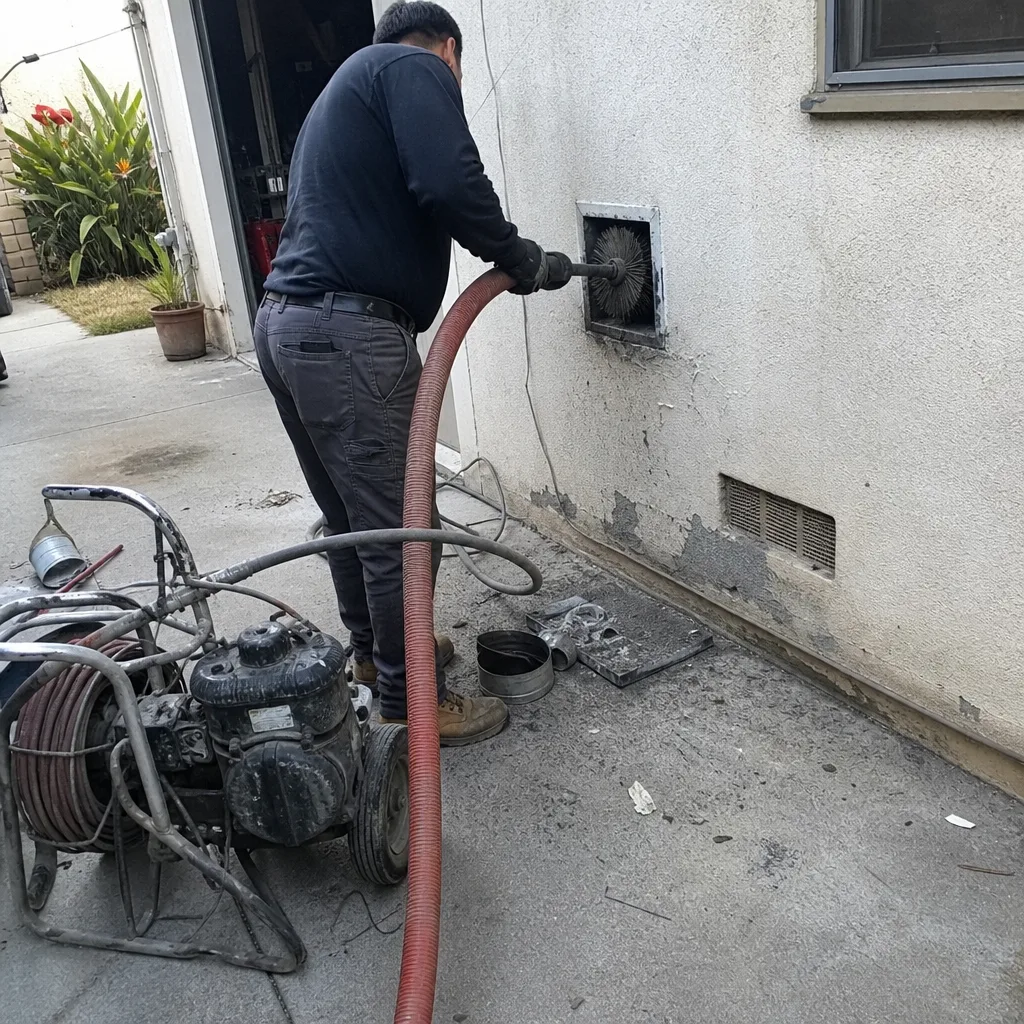 Before
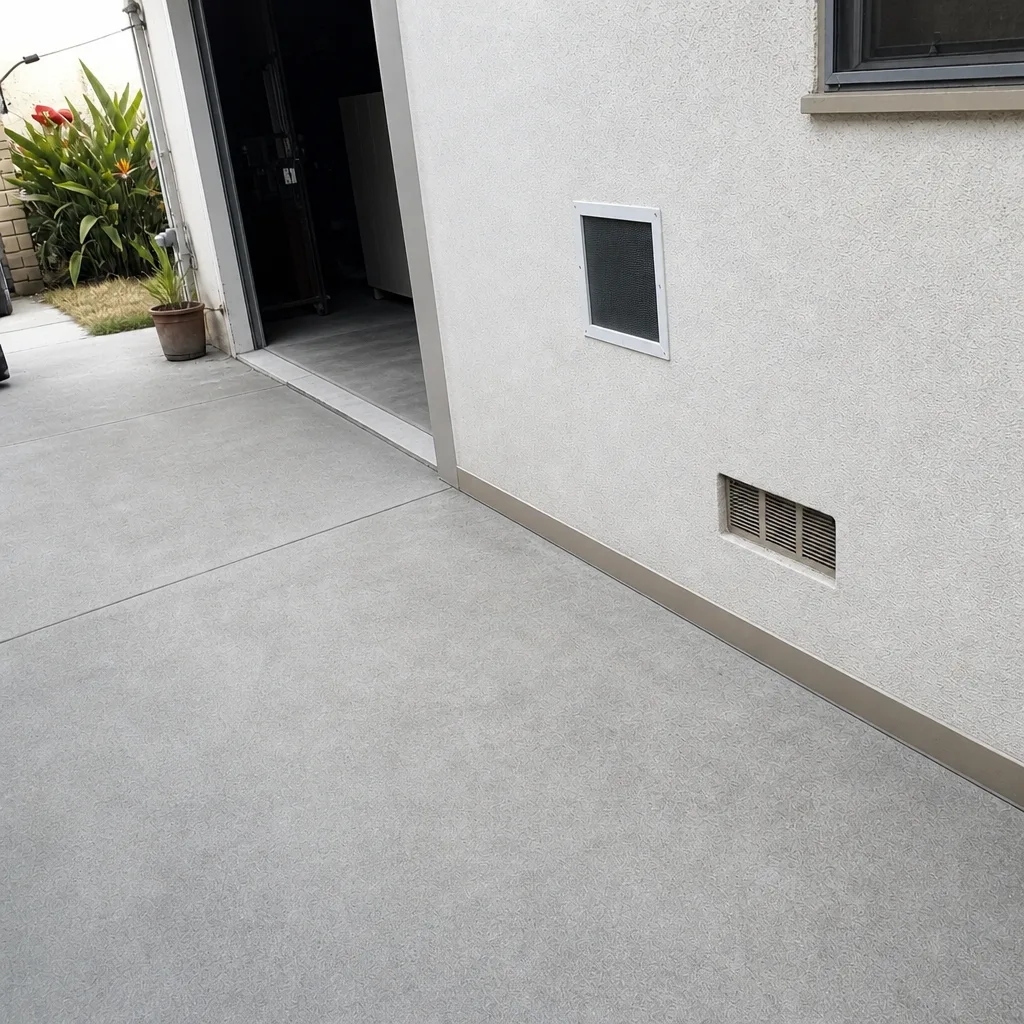 After
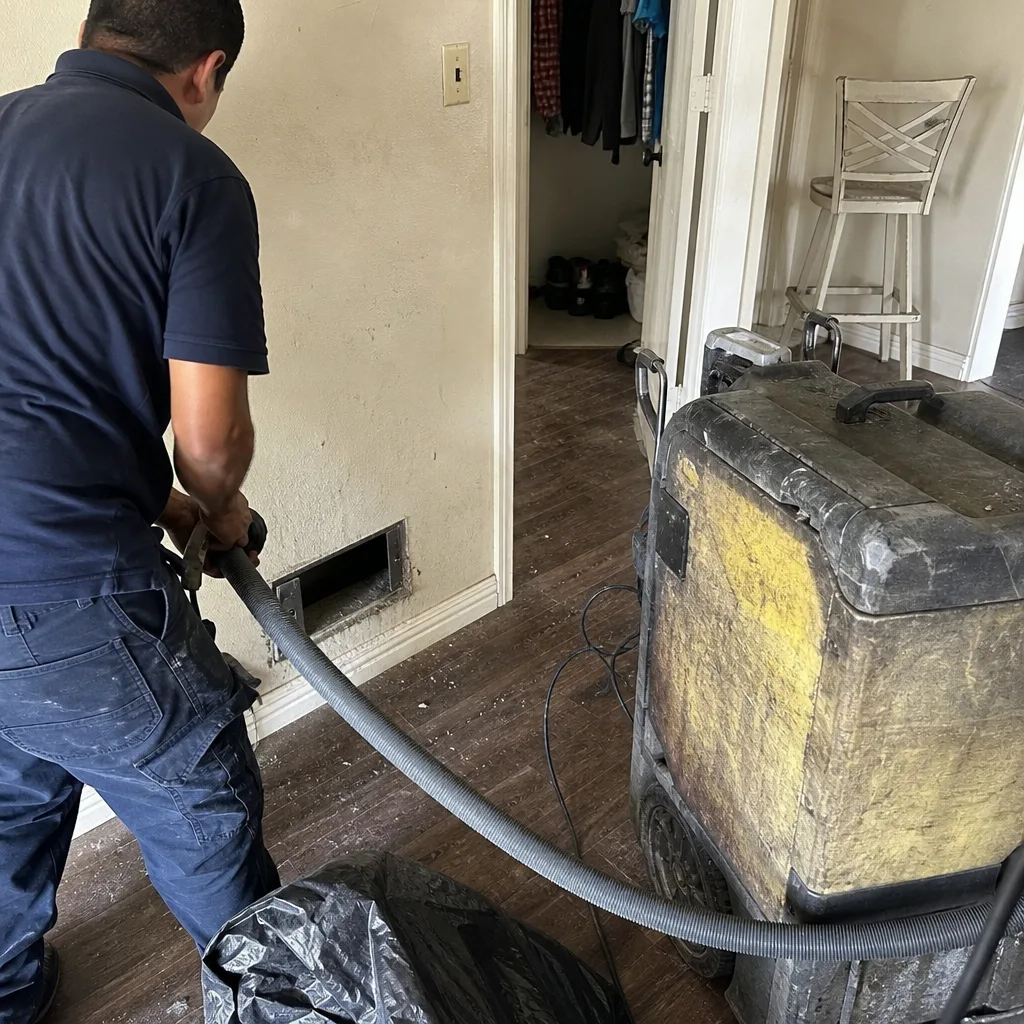 Before
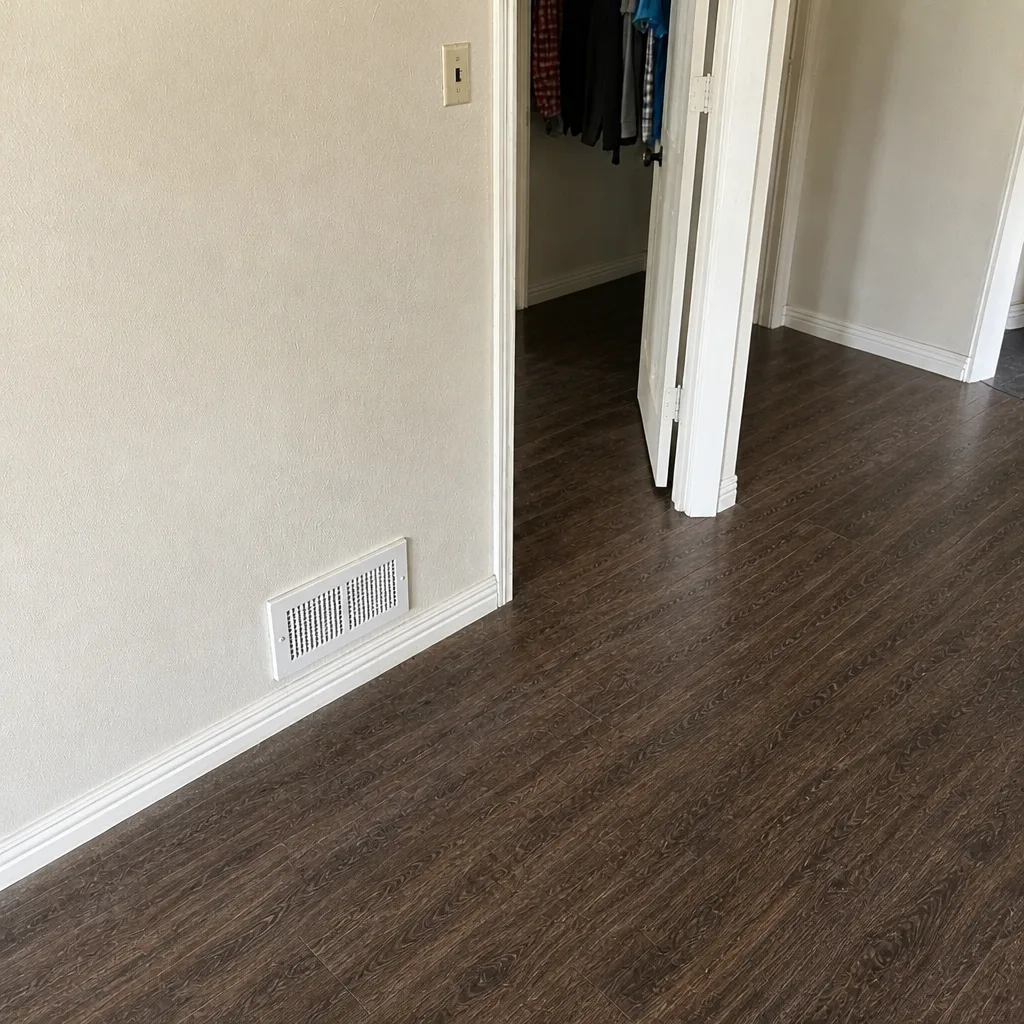 After
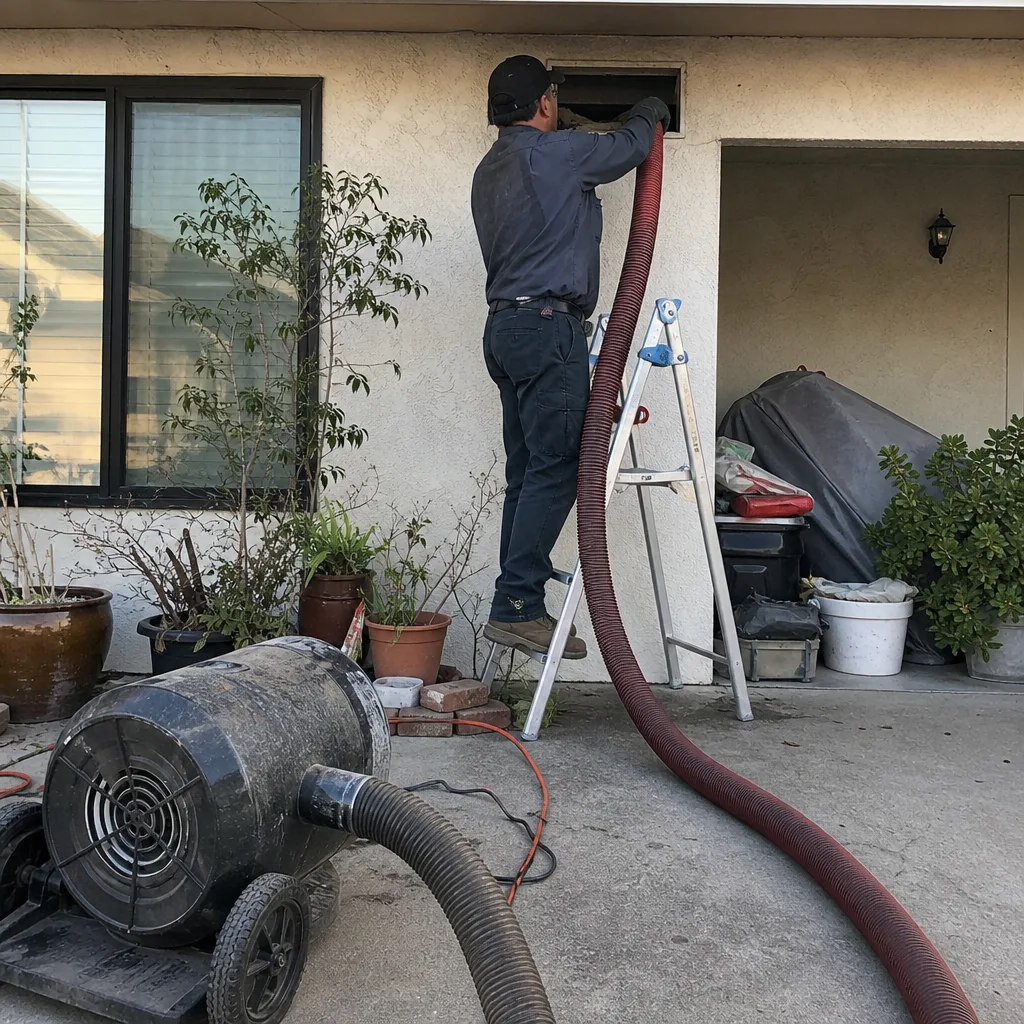 Before
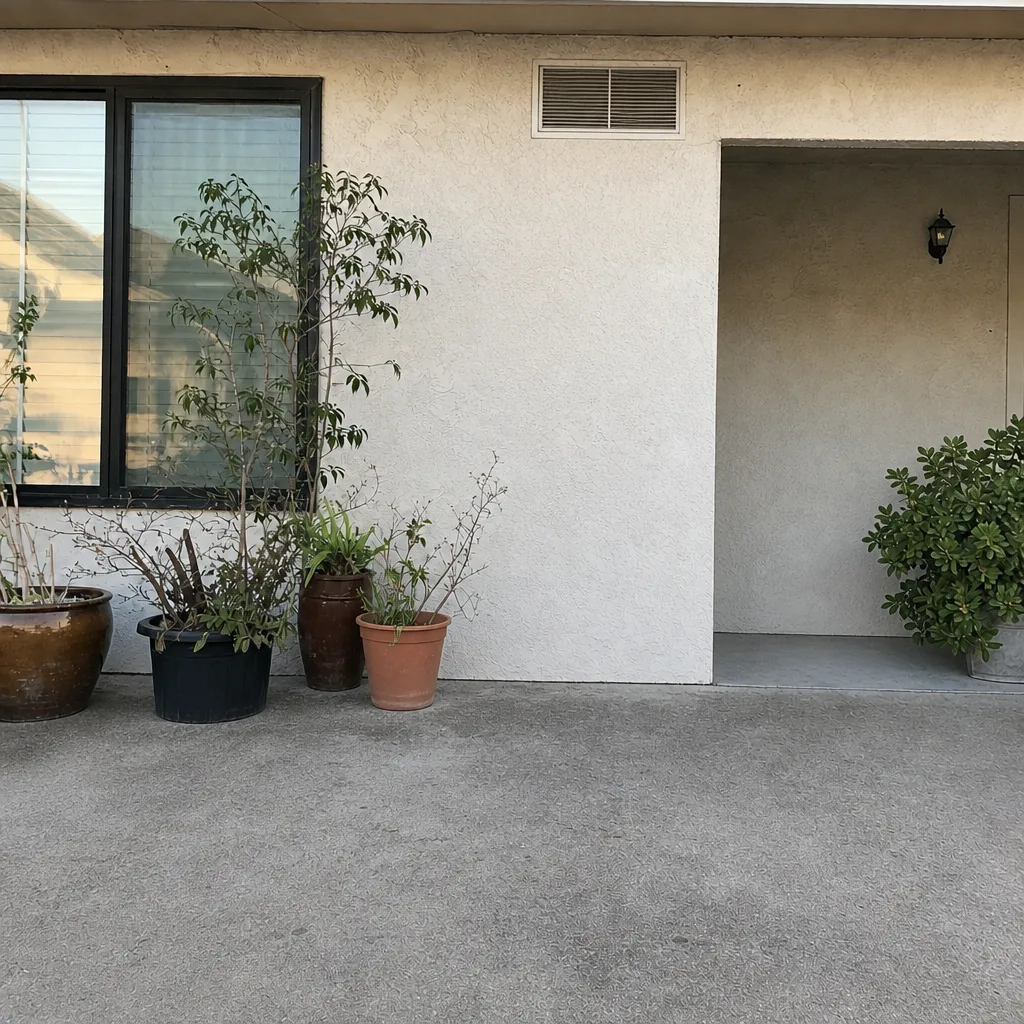 After
When to Call a Professional
Some duct cleaning is routine maintenance, and some is prompted by a specific problem. Call a professional when you notice visible dust streaking from supply registers, musty odors when the HVAC kicks on, worsening allergy symptoms at home, or a noticeable drop in airflow from the vents. If your dryer takes longer than it used to, that’s a signal to get the vent inspected. And if you’ve never had the ducts cleaned and you can’t remember the last filter change, a professional assessment is worth the call.
Air Duct Cleaning Garden Grove Pros offers free estimates in Garden Grove. Call (877) 792-6315. We answer 24/7. Fast dispatch from 7am to 7pm, Sunday through Friday. One flat price per system is agreed before work starts, so you’ll know the scope before anyone touches your ducts.
Frequently Asked Questions
The names that matter most are Rotobrush and Nikro for agitation and cleaning tools, and Abatement Technologies for HEPA negative air machines. For air quality components, Honeywell and Aprilaire are the most common brands in residential systems. A company using these brands is working with professional-grade tools that aren’t available through retail channels, which is a stronger quality signal than a review count. Call (877) 792-6315 for an exact quote on your system.
Most whole-home duct cleanings are priced per system, not per vent, and the final number depends on the number of systems, duct access, and which services are included. The written estimate sets the price. Call (877) 792-6315 for a free estimate and a flat per-system quote.
Cheap quotes usually cut one of three things: equipment grade, sanitizer quality, or scope. A shop vac and a generic fogger cost a fraction of a Rotobrush system with EPA-registered sanitizers, and a quote that skips sealing or dryer vent inspection leaves work undone. The savings show up later as air quality that doesn’t improve. Call (877) 792-6315 to compare a full-scope quote against the low one.
Ask for before-and-after photos of your own ducts, which the technician should be able to provide. A defined scope with documented stages – inspection, agitation, vacuum extraction, sealing, sanitizing – is the standard to expect. If a company can’t show you what changed, that’s the answer. Call (877) 792-6315 to ask what documentation comes with a job.
Most homes don’t need it on a fixed schedule. It’s usually worth doing after major renovations, when you notice dust or musty odors from the registers, or when the ducts haven’t been cleaned in a long time and the HVAC is showing reduced airflow. Homes in Garden Grove with pets or nearby traffic may need more frequent filter changes than duct cleanings. Call (877) 792-6315 for a quick assessment.
Not always, but it’s worth checking. The dryer vent is a separate system from the HVAC ducts, and lint buildup in the vent path is a leading cause of residential house fires. If the dryer runs hotter or takes longer, get the vent inspected. Call (877) 792-6315 to schedule a dryer vent safety inspection alongside a duct cleaning.
The Bottom Line
Shopping for duct cleaning is a test of specificity. The right company names its equipment, explains its filtration and negative pressure, recommends filters by brand and MERV rating, and covers the whole system in one scope. The wrong company talks about price and guarantees and hopes you never ask. In Garden Grove, where housing stock ranges from mid-century to new, the homes need technicians who can handle both. Ask the four questions, listen for brand names, and compare on scope rather than the cheapest line item. That’s the shortcut this guide is built to give you.
Call (877) 792-6315 for a free estimate. We answer 24/7. Fast dispatch from 7am to 7pm, Sunday through Friday. One flat price per system is agreed before work starts.
Written by the team at Air Duct Cleaning Garden Grove Pros.