
Last updated November 24, 2026
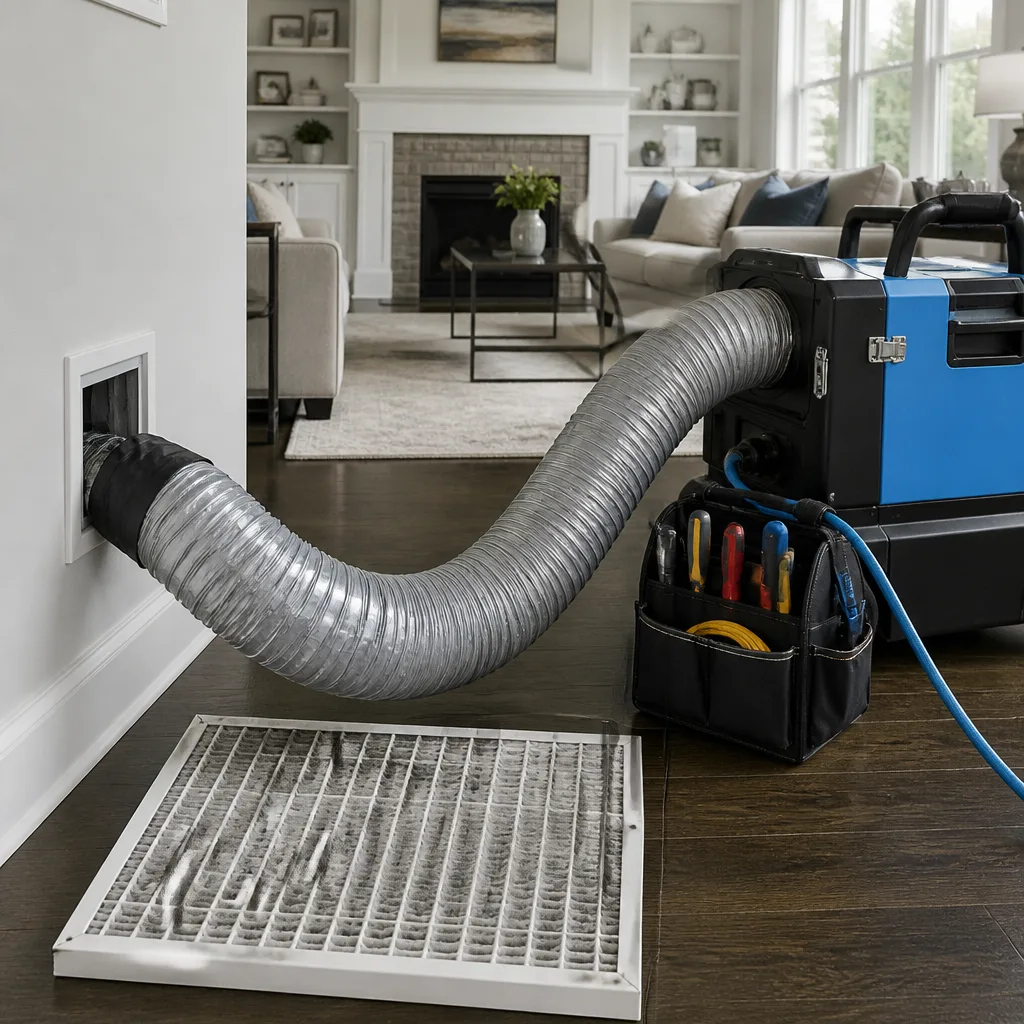 Whole-home duct cleaning
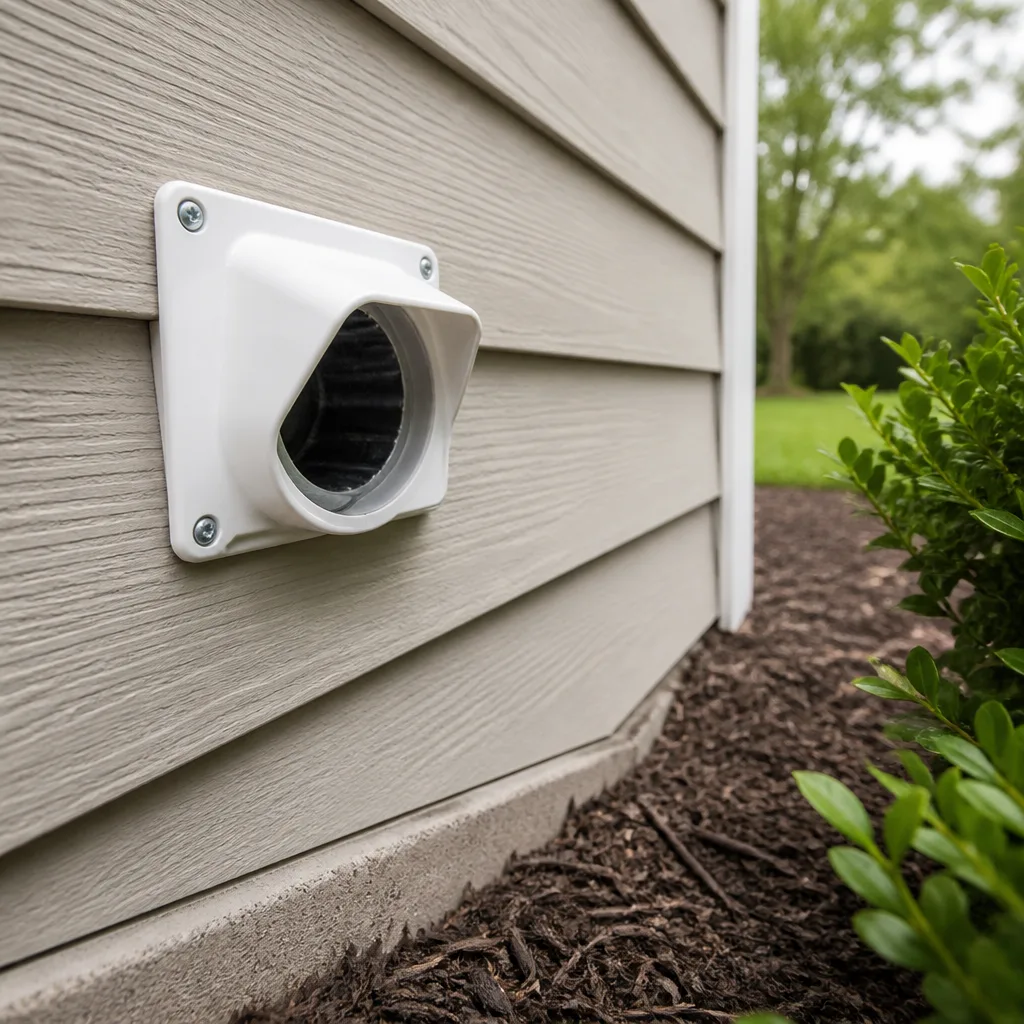 Dryer vent cleaning
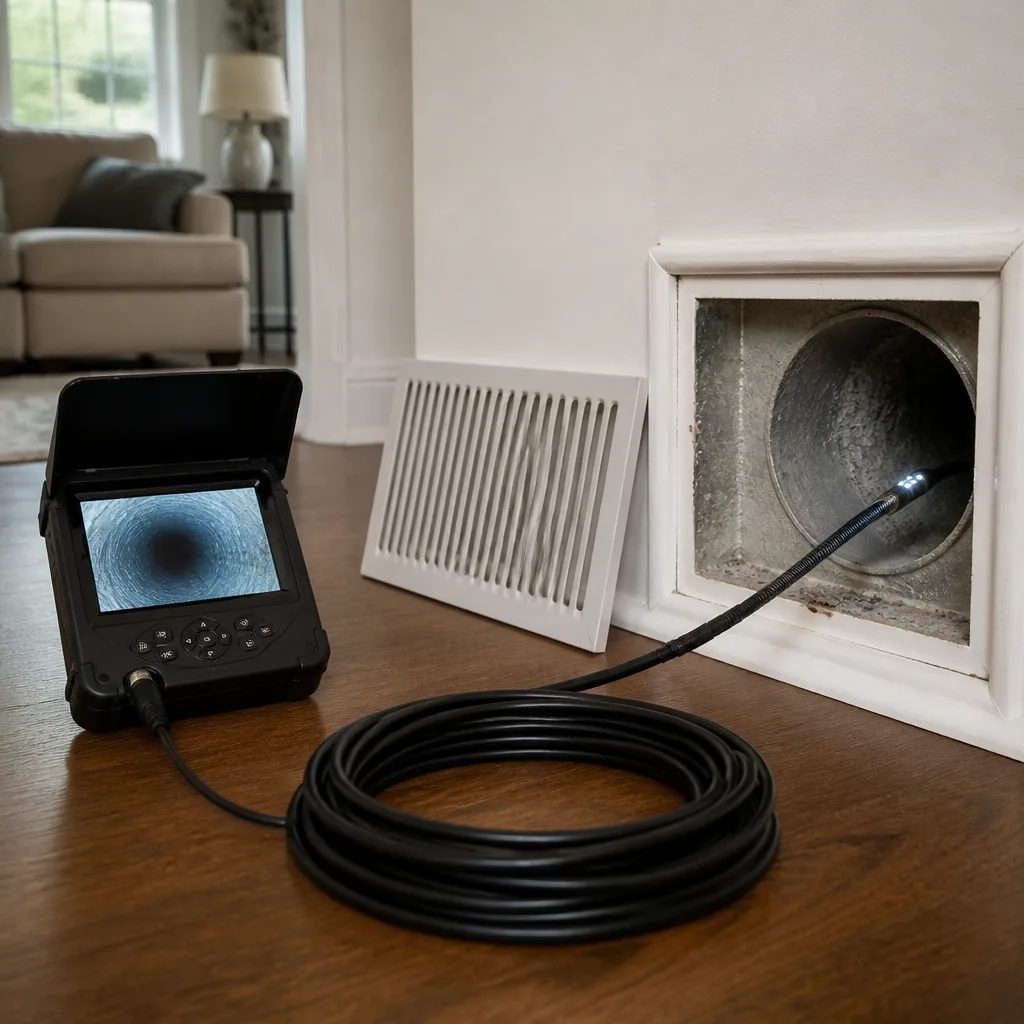 Camera inspection
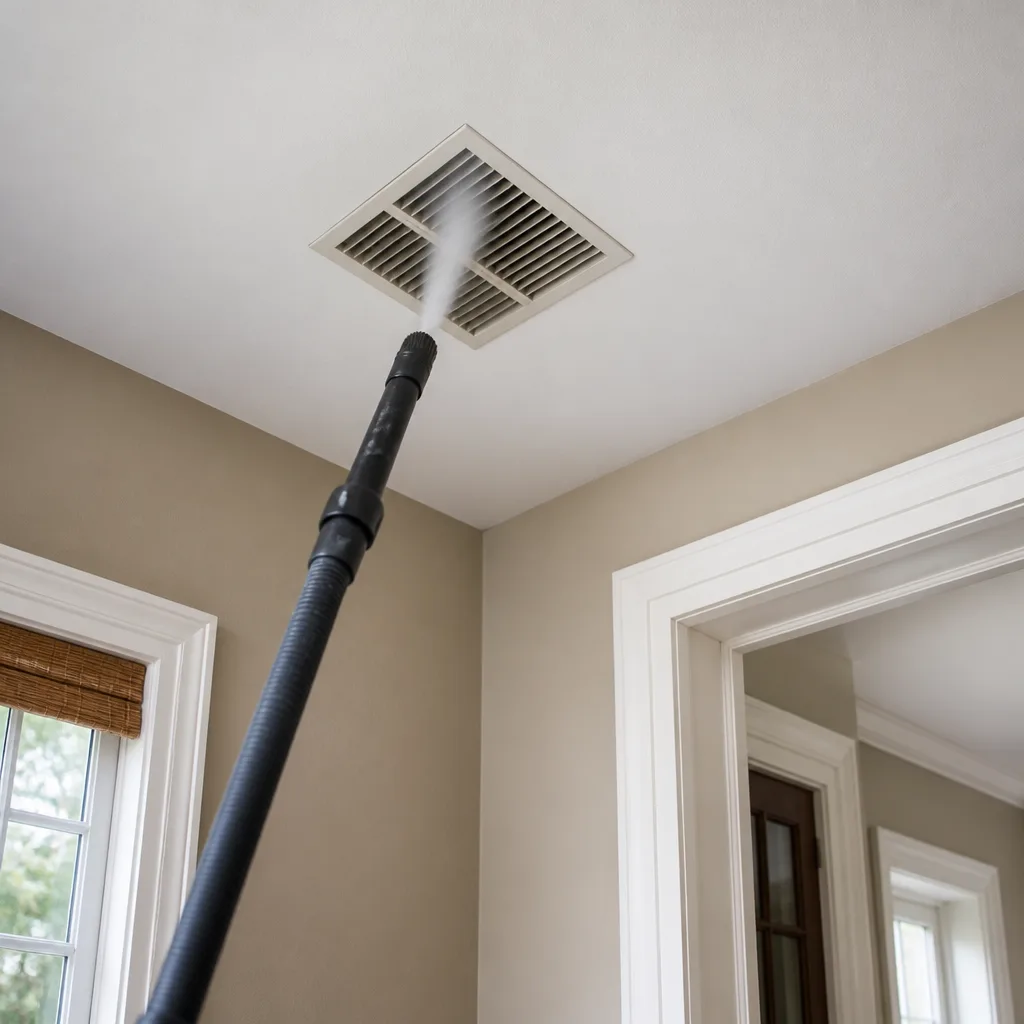 Sanitizing & deodorizing
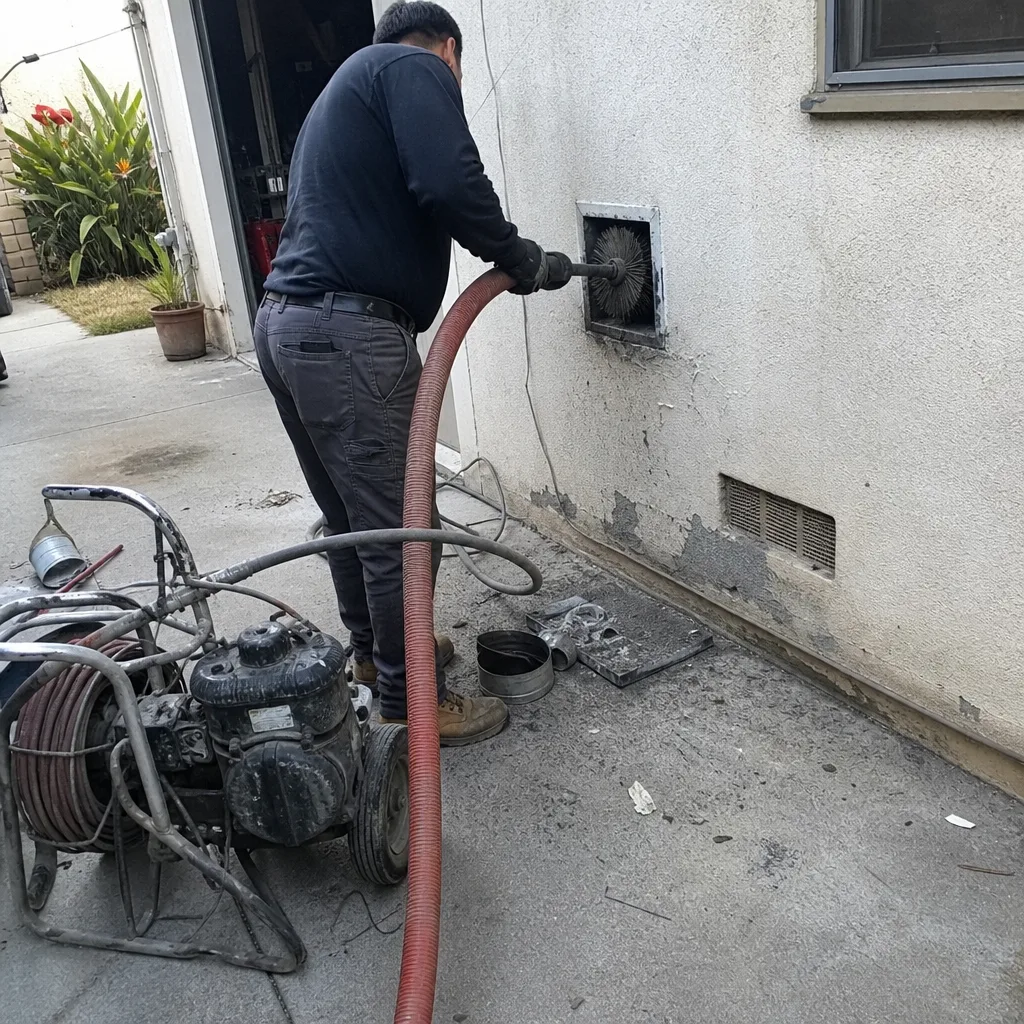
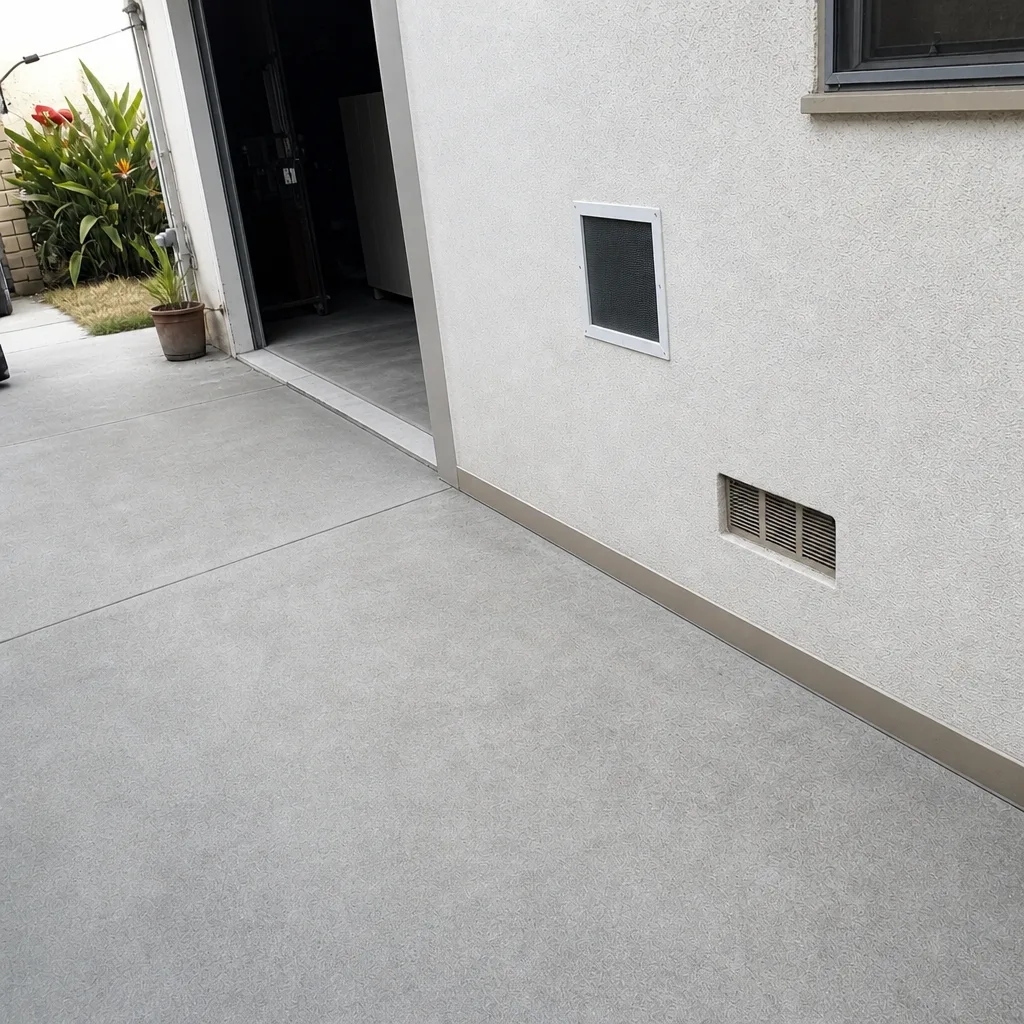
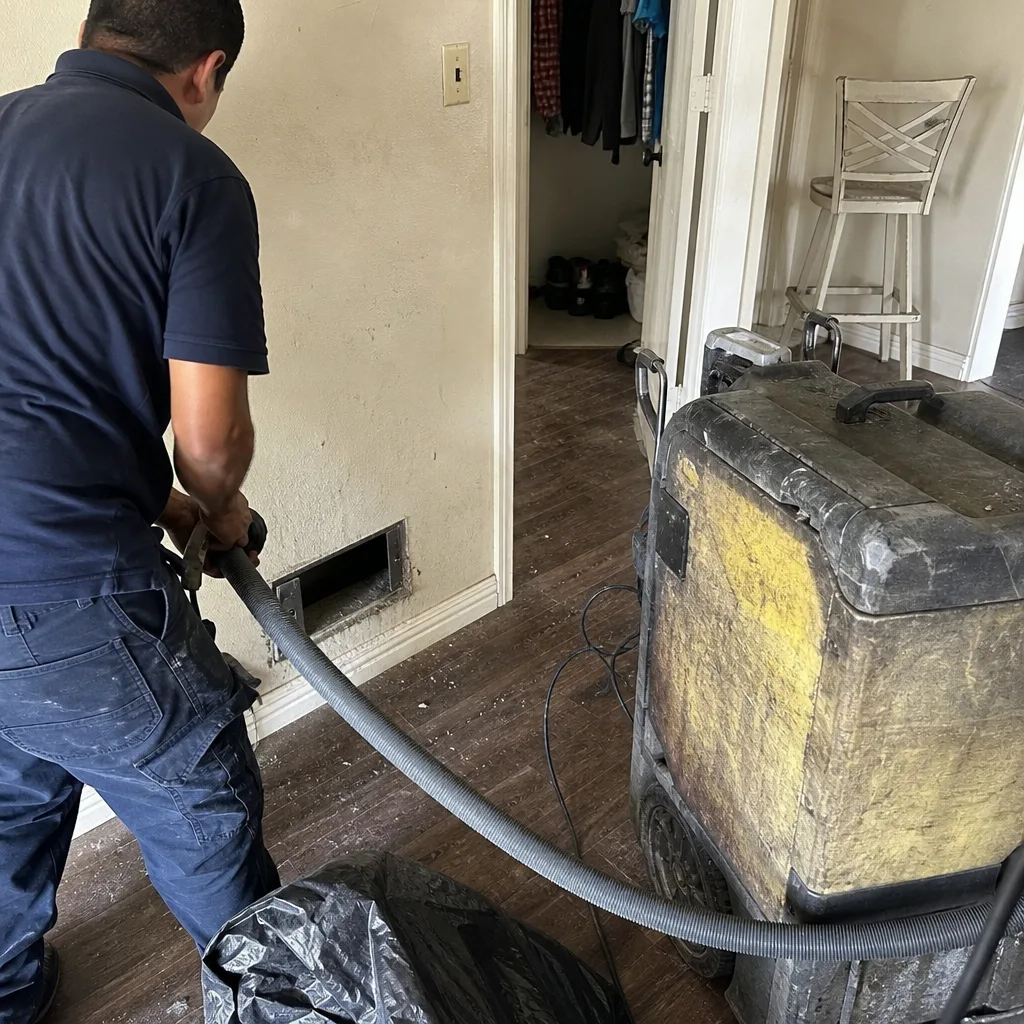
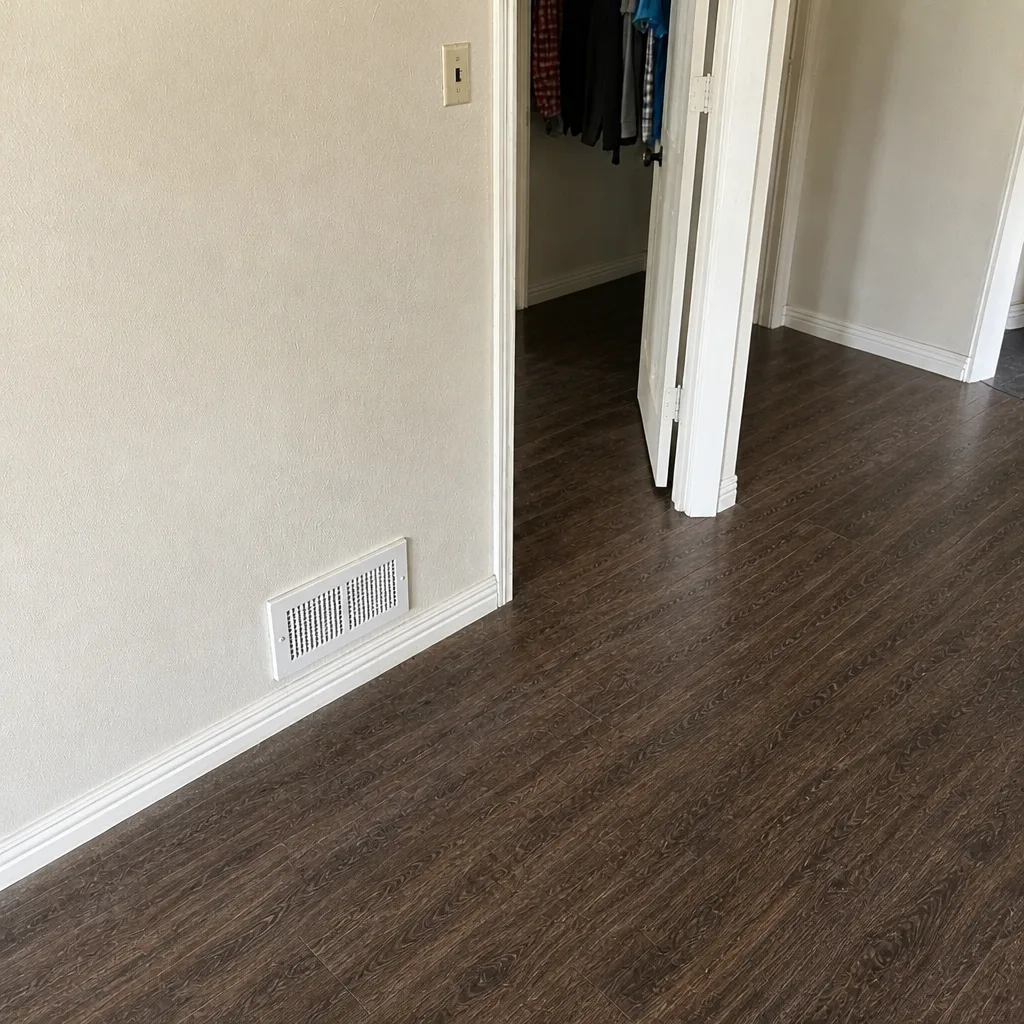
Whole-system duct and dryer vent check with before-and-after photos - you see exactly what came out of your vents
That "$99 whole-house special" is a bait ad - the real number appears once they are in your hallway, or the "clean" is a shop-vac at the register. We photograph the inside of your ducts before and after instead.
DIY vs Professional Air Duct Cleaning: The Garden Grove Homeowner’s Decision Guide
Here’s the part that surprises most homeowners: a shop vacuum pulls roughly 50 CFM of suction. A professional truck-mounted vacuum moves 3,000 to 15,000 CFM. Both technically “vacuum your ducts,” but only one actually moves the debris packed into the main trunk lines and return plenums. The difference isn’t effort or technique on your end. It’s physics. In this guide, we’ll walk through the real airflow and negative-pressure thresholds that professional systems hit and consumer tools can’t, what you can honestly do yourself in a Garden Grove home, and when calling a specialist is the smarter call.
Quick Answer
DIY air duct cleaning is genuinely worthwhile for register cleaning, filter swaps, and dryer vent lint removal, but it cannot clean a trunk line or return plenum because consumer vacuums can’t generate the airflow velocity and sustained negative pressure required. Professional air duct cleaning uses truck-mounted or high-output equipment with agitation tools to dislodge and capture debris simultaneously. If your system has never been cleaned or you’ve noticed more dust, a professional visit is the right starting point.
Styles & brands we work with
- Whole-home duct cleaning
- Dryer vent cleaning
- Camera inspection
- Sanitizing & deodorizing
Table of Contents
- The CFM and Negative Pressure Thresholds That Actually Matter
- What a Garden Grove Homeowner Can Legitimately Do Themselves
- When DIY Attempts Make Professional Cleaning Harder
- What Professional Equipment Actually Does That Changes the Cost Math
- Why Duct Cleaning Isn’t Just Duct Cleaning: The Full-System Scope
- Garden Grove Climate and Housing Factors That Affect Your Ducts
- Dryer Vent Safety: The One DIY Task That Deserves Extra Care
- A Simple Framework for Deciding DIY vs Professional
The CFM and Negative Pressure Thresholds That Actually Matter
Air duct cleaning works only when two things happen at once: debris has to be dislodged, and the moment it’s airborne, it has to be captured. Consumer shop vacuums fail on both counts. CFM (cubic feet per minute) measures the volume of air a vacuum moves. A typical shop vac can pull somewhere around 50 to 150 CFM on a good day. A professional truck-mounted system can generate anywhere from 3,000 to 15,000 CFM at the point of connection.
That difference in airflow isn’t a marketing number. It’s what creates the negative pressure inside your duct run. Without sustained negative pressure, cleaning a 30-foot trunk line is like trying to sweep a hallway with a fan pointing the wrong direction. The loose debris stirs up, drifts, and settles back down a couple of feet away.
What “sustained negative pressure” really means
Professional systems connect to the supply or return trunk and pull so much air that the entire duct run stays under constant negative pressure during cleaning. That means every particle dislodged by a rotary brush or air whip is immediately drawn toward the vacuum source instead of floating into your living room. It also means the technician can clean from a single connection point rather than chasing debris from register to register.
- Consumer tool: ~50-150 CFM, short bursts of suction, no sustained negative pressure in the duct run.
- Professional rotary system: high airflow with an integrated rotary brush that agitates the duct wall while the vacuum captures the loosened material.
- Professional truck-mount: 3,000-15,000 CFM, sustained negative pressure, dedicated HEPA or multi-stage filtration.
Why airflow velocity matters as much as raw suction
Dust in a duct isn’t sitting on a flat floor. It clings to the walls, packs into corner seams, and coats the inner ribs of flex duct. You need velocity across the surface to break the film, not just suction on the end. A shop vac can pull loose surface dust off a short register boot. It cannot break the packed layer inside the main trunk, which is exactly where a decade of buildup lives in a Garden Grove home.
What a Garden Grove Homeowner Can Legitimately Do Themselves
We’re not going to tell you that every DIY task is pointless. A homeowner who handles the maintenance layer well actually makes a professional cleaning go smoother and lasts longer. Here’s what’s genuinely worth your time:
- Swap filters on schedule. A clean filter keeps dust out of the system in the first place. Check it monthly during heavy AC months and every couple of months otherwise. If it’s gray before you expect it to be, your ducts are likely contributing.
- Vacuum registers and grilles. Pop them off, wash them in the sink or hose them off outside, and wipe down the boot opening with a damp cloth. This stops dust at the surface before it re-enters the air.
- Remove the dryer vent lint trap lint after every load. Simple, fast, and one of the most effective ways to reduce lint buildup in the vent line.
- Inspect with a phone camera. Slide your phone into a register boot or the dryer vent opening and take a photo or short clip. You’ll see visible debris, nesting material, or duct damage. This is the single best DIY diagnostic tool a homeowner has.
- Keep return grilles unobstructed. Furniture pushed against a return grille starves the system and increases static pressure, which pulls more dust into the ductwork.
- Note when air quality changes. If dust builds up faster than it used to, that’s data worth writing down. It helps a technician focus on the right zone.
These tasks cost nothing, take minutes, and make the question of whether you need Air Duct Cleaning Garden Grove Pros services easier to answer honestly.
When DIY Attempts Make Professional Cleaning Harder
Here’s where the “just try it yourself” advice goes sideways. A homeowner who runs a shop vac into a register boot isn’t cleaning the duct; they’re disturbing the debris without capturing it. Here’s what actually happens in a Garden Grove home when that plays out:
- Compressed debris. Consumer vacuum heads pressed hard against a register boot can pack loose dust into the duct wall rather than pulling it out. The result is a denser, more stubborn layer that takes longer (and more agitation) to break up during a professional clean.
- Damaged flex duct. A shop vac brush or rigid wand dragged through flex duct can tear the inner liner. That’s a repair, not a cleaning, and it’s exactly the kind of damage that leaks air into the attic or crawlspace.
- Disturbed but uncaptured particulate. Loose dust that’s kicked up but not captured settles back into the duct or blows into the room. Homeowners notice the room feels dustier afterward, assume duct cleaning doesn’t work, and never call a professional. The problem wasn’t the cleaning; it was the equipment.
- Missed zones. Without negative pressure pulling the whole run, a DIY attempt cleans the first two feet of one register and leaves the trunk line untouched. The homeowner thinks they’ve finished the job when they’ve cleaned 5% of the system.
If you’ve already tried a DIY pass and noticed it didn’t help, that’s normal. The system needs proper airflow, not more effort.
What Professional Equipment Actually Does That Changes the Cost Math
Professional duct cleaning isn’t a bigger version of what you can do at home. It’s a different category of operation. We use Rotobrush and Nikro professional duct-cleaning systems, the same class of equipment used by commercial and restoration contractors. They combine a rotary agitation tool (a spinning brush or air whip) with a high-CFM vacuum capture, so debris is loosened and pulled into the vacuum in the same stroke. That’s the critical difference from “push and hope.”
How a typical professional cleaning runs
- System inspection. The technician maps the duct layout, identifies the main trunk and return plenum, and notes any visible damage or disconnected sections.
- Negative pressure set up. The truck-mount or high-output unit connects to the trunk, pulling the entire run under constant vacuum.
- Agitation. A rotary brush or air whip travels the length of each run, breaking the dust film off the duct wall.
- Simultaneous capture. Debris is pulled into multi-stage filtration the moment it’s dislodged, so it never re-settles.
- Register and boot cleaning. Each supply and return opening gets cleaned individually.
- Verification. Before-and-after photos of your ducts document what was removed. That’s how you know the work was actually done.
Abatement Technologies equipment is used in our work for contaminant and particulate control, which matters in homes where someone has allergies, asthma, or has recently dealt with water damage or remodeling dust. The point of the professional scope isn’t a bigger invoice. It’s the ability to handle the debris that consumer tools can’t reach.
Why Duct Cleaning Isn’t Just Duct Cleaning: The Full-System Scope
If you’re paying for the equipment and the technician, it makes sense to have the whole system looked at while they’re there. A duct problem is rarely isolated to the ducts themselves. It connects to the air handler, the registers, the returns, and often the dryer vent line running through the same wall cavity.
Our five core services exist because these systems share real estate and airflow:
- Air duct cleaning removes debris from supply and return runs.
- Dryer vent cleaning addresses lint buildup and fire risk in a separate duct that gets overlooked.
- HVAC cleaning handles the air handler, coil, and blower, where dust collects and degrades efficiency.
- Duct repair and sealing fixes disconnected joints, torn flex, and gaps that leak conditioned air.
- Air quality and sanitizing treats the system after cleaning with Guardsman-grade protective treatments and, where relevant, works with Honeywell and Aprilaire filtration and purification components.
The reason this scope matters in a Garden Grove home is that these systems age together. A homeowner who only cleans the ducts but ignores a disconnected flex run in the attic is going to see the dirt return quickly. Sealing and repairing is what makes the cleaning last.
Garden Grove Climate and Housing Factors That Affect Your Ducts
Garden Grove sits in a mild, coastal-influenced climate, and that shapes how ductwork behaves here. Winters are gentle compared to the rest of the country, which means the heating side of your system runs less and the cooling side runs more. That’s actually a useful clue: dust accumulation patterns correlate with the season you run the system hardest, which here means summer and the shoulder months when AC cycles on and off all day.
Housing stock in Garden Grove ranges from mid-century single-story homes to newer two-story builds, and each has its own duct quirks. Older homes often have original rigid metal ductwork with either flex runs added over time or attic ductwork that has been patched. Newer construction tends toward longer flex runs and tighter layouts, which makes any disconnected joint or torn liner more impactful.
What to watch for in Garden Grove specifically
- Attic duct runs. Many Garden Grove homes route ductwork through unconditioned attic space. If a run is disconnected or torn, your system pulls attic air and insulation particles into the living space. A phone-camera inspection up there is worth doing.
- Mild weather and long AC seasons. Because the system runs a lot for cooling, filter placement and cleanliness have an outsized effect on what ends up in the ducts.
- Dust from nearby construction and roads. Garden Grove sits in a dense part of Orange County. Ongoing road work and remodeling in surrounding neighborhoods contribute fine particulate that finds its way into return grilles first.
- Landscaping and dry seasons. Long dry stretches mean more airborne dust outside, which means more coming in when windows and doors open.
If you notice dust building up around your home faster than it used to, that’s the signal to schedule a look. HVAC cleaning and a full duct inspection together give you the cleanest starting point.
Dryer Vent Safety: The One DIY Task That Deserves Extra Care
Dryer vent lint removal at the trap and just inside the machine is reasonable DIY maintenance. What’s not reasonable is trying to clean the full vent run yourself with a shop vac and a flexible brush. Lint buildup inside the vent line is a real fire risk, and the vent run in many Garden Grove homes snakes through walls with corners a consumer tool can’t negotiate properly. A shop vac brush can pack lint into the vent line or tear the foil liner, which is worse than leaving it alone.
Our dryer vent cleaning service treats the vent as a fire-prevention inspection rather than a maintenance add-on. The technician checks the full run, removes lint carefully, and confirms the external vent flap opens and closes freely. If you haven’t had your dryer vent line inspected and you’ve lived in the home for years, it’s worth the call.
A Simple Framework for Deciding DIY vs Professional
Here’s how we’d help a Garden Grove homeowner sort this out. Run through these questions in order:
- Has the system ever been professionally cleaned? If not, start with a professional visit. DIY can’t do what a first cleaning needs to do.
- Is the system more than a few years old? Older systems almost always have packed trunk lines. Schedule professional cleaning first.
- Did you recently notice more dust, allergy symptoms, or a musty smell from the registers? These point to a source that a professional needs to locate.
- Has the system been professionally cleaned within the last few years, and you’re just maintaining? This is the one situation where DIY is the right answer. Register cleaning, filter swaps, and lint trap clearing keep the system clean between professional visits.
- Is your dryer vent line overdue for inspection? Call a professional, even if everything else is under control.
If you’re anywhere in categories 1 through 3, DIY effort goes into ineffective territory fast. If you’re in category 4, the maintenance routine above is genuinely useful and we’d rather you know that than pay for a cleaning you don’t need.
Common Mistakes to Avoid
- Using a shop vac on a return plenum. The airflow needed to move debris in a return plenum is far beyond what a shop vac generates. You’ll swirl dust into the room rather than remove it.
- Running a brush into flex duct. Flex duct liners tear easily. A rigid brush that seems to move freely can slice through the inner layer, creating a leak that costs more to repair than the cleaning would have.
- Assuming “no visible dust” means clean ducts. Dust settles where airflow is slow. The trunk line can be packed while every register looks clean.
- Ignoring the attic duct run. In many Garden Grove homes the most consequential leaks are in the attic, not the wall. A phone camera pointed up there is worth the two minutes.
- Cleaning the ducts but not addressing the dryer vent. The two systems share wall cavities and both collect lint and dust. Leaving the dryer vent untouched leaves a fire risk in place.
- Skipping before-and-after documentation. If a cleaning doesn’t include photos of your own ducts, you have no way to confirm the work was done. Ask for it up front.
- Believing a per-vent coupon. A low per-vent price often becomes a much larger invoice once a technician is on site. Ask for a flat price for the whole system instead.
See the difference
 Before
 After
 Before
 After
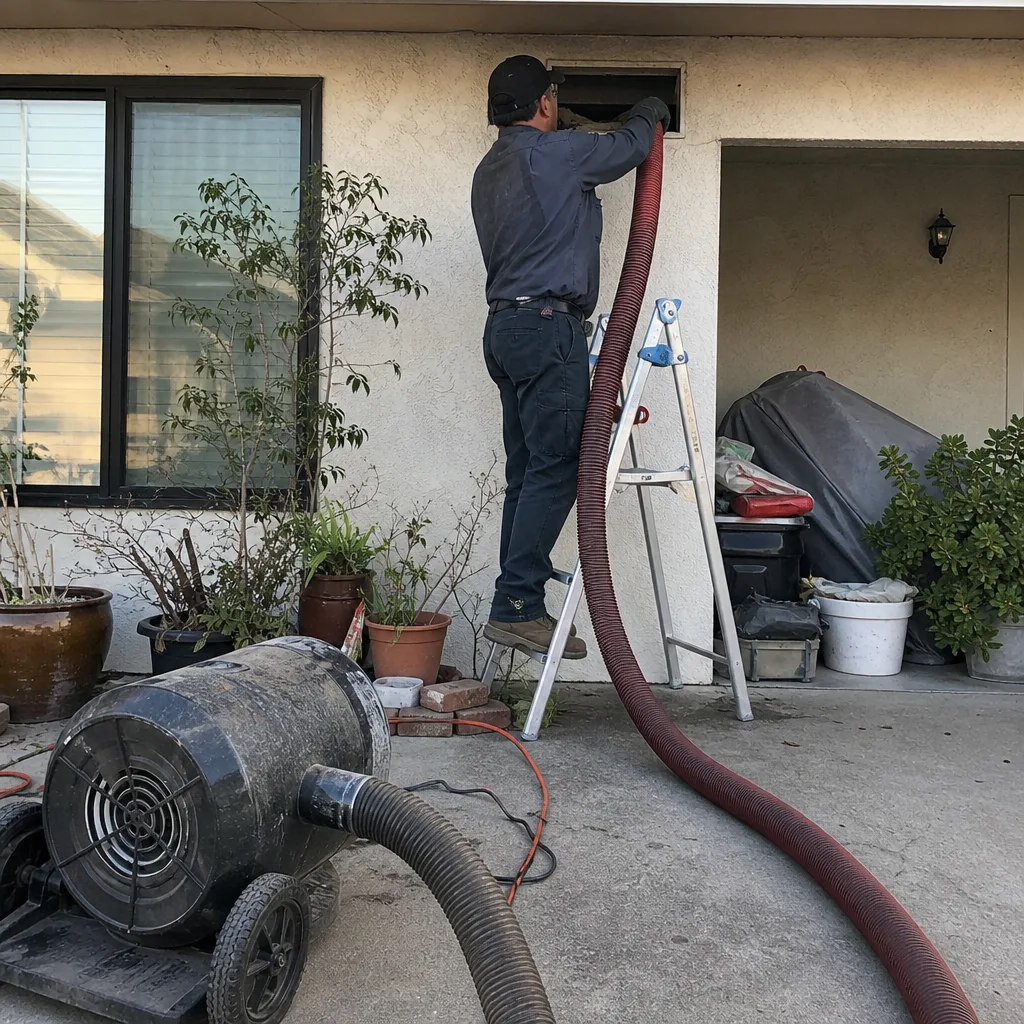 Before
 After
When to Call a Professional
Some situations clearly point to professional help. If your system has never been cleaned, if you’ve noticed increasing dust or a musty smell from the registers, if someone in the home has allergies or asthma that seems tied to indoor air, if you’re moving into a Garden Grove home and don’t know its cleaning history, if the dryer vent line hasn’t been inspected, or if you’ve tried a DIY pass and it didn’t help, those are all professional territory. The equipment required to dislodge and capture debris from a trunk line isn’t something a homeowner can replicate with consumer tools, and the technician experience (up to 12 years on our team) matters for spotting damage, disconnected runs, and hidden problems the camera can’t reach. Air Duct Cleaning Garden Grove Pros offers free estimates in Garden Grove. Call (877) 792-6315. We answer 24/7. Fast dispatch from 7am to 7pm, Sunday through Friday.
Frequently Asked Questions
No, a shop vac can’t clean air ducts in a Garden Grove home because consumer vacuums generate roughly 50-150 CFM while professional systems move 3,000-15,000 CFM, and the trunk lines need sustained negative pressure that only professional equipment provides. You can clean registers, swap filters, and remove lint trap debris yourself, but the ductwork itself needs a professional pass. Call (877) 792-6315 for a free estimate.
Air duct cleaning in Garden Grove is priced per system by written estimate rather than by a teaser coupon, and the price is agreed before any work starts. That’s the cleanest way to compare quotes, because per-vent pricing often expands once the technician is on site. Ask for a flat per-system price and before-and-after photos of your own ducts. Call (877) 792-6315 for an exact quote; estimates are free.
Some quotes are cheaper because they’re not covering a full-system cleaning. A low advertised price often translates to a brief register pass rather than a trunk-and-return clean with proper agitation and capture. The comparison that matters is the flat price for the whole system with documented before-and-after photos, and that’s what a written estimate should specify. Call (877) 792-6315 to talk through what a full-system clean includes.
Ask for before-and-after photos of your own ducts. A professional cleaning should document each supply and return run, and the photos should be from your home, not a stock set. That’s a reasonable request at the estimate stage, and any specialist should have no issue with it. Call (877) 792-6315 to schedule an estimate.
Most Garden Grove homes benefit from professional cleaning every few years, though it depends on filter habits, pets, recent remodeling, and whether the system has any leaks. Homes with pets, allergy concerns, or active remodeling tend to need it more often. Between professional visits, register cleaning and filter swaps keep things under control. Call (877) 792-6315 if it’s been a while.
Cleaning the lint trap is safe DIY, but cleaning the full dryer vent line yourself is not recommended. Lint buildup in the vent run is a fire risk, and consumer brushes can pack lint into the line or tear the liner, which is worse than leaving it. A professional inspection confirms the full run is clear and the external flap opens and closes correctly. Call (877) 792-6315 for a professional dryer vent inspection.
The Bottom Line
DIY duct cleaning makes sense for maintenance only: register cleaning, filter swaps, dryer lint trap clearing, and phone-camera inspections. It does not work for trunk lines or return plenums, because consumer equipment can’t generate the CFM and sustained negative pressure needed to dislodge packed debris and capture it in the same stroke. Professional air duct cleaning changes the physics, not just the effort. If your Garden Grove home has never been professionally cleaned, start there. If it has, maintain it well between visits and you’ll get more from each cleaning.
If you’ve read this far and you’re not sure which category you fall into, call us. We’d rather point you to a free estimate than have you spend a Saturday with a shop vac that can’t do the job. Call (877) 792-6315. We answer 24/7. Fast dispatch from 7am to 7pm, Sunday through Friday.
Written by the team at Air Duct Cleaning Garden Grove Pros.