
Last updated November 24, 2026
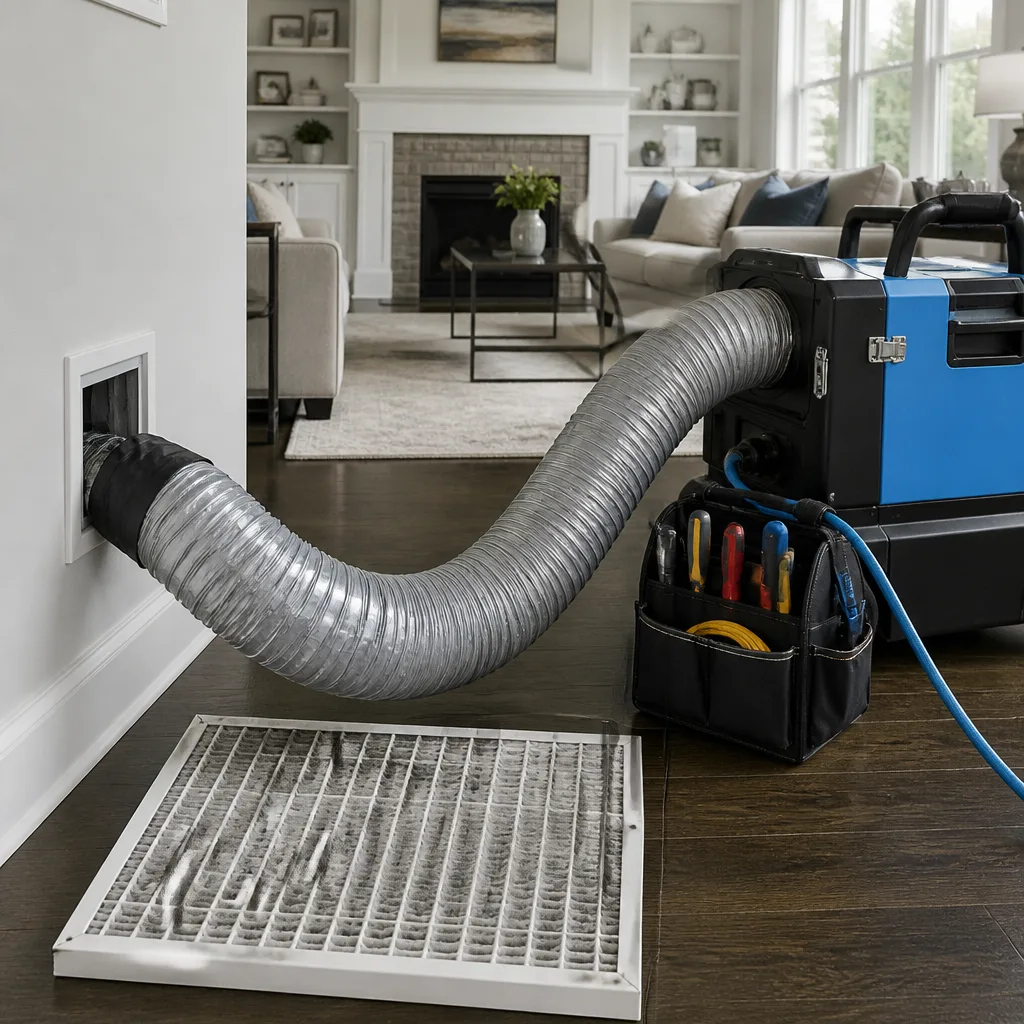 Whole-home duct cleaning
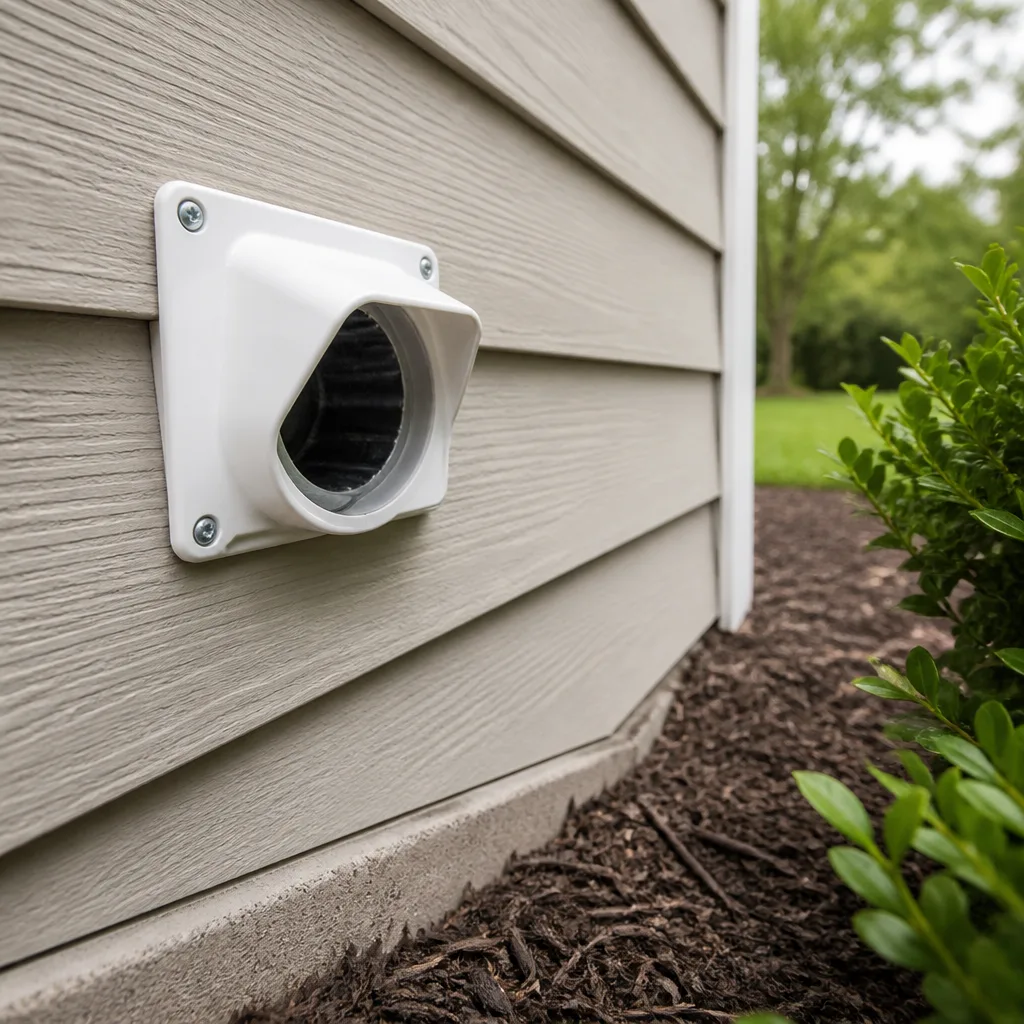 Dryer vent cleaning
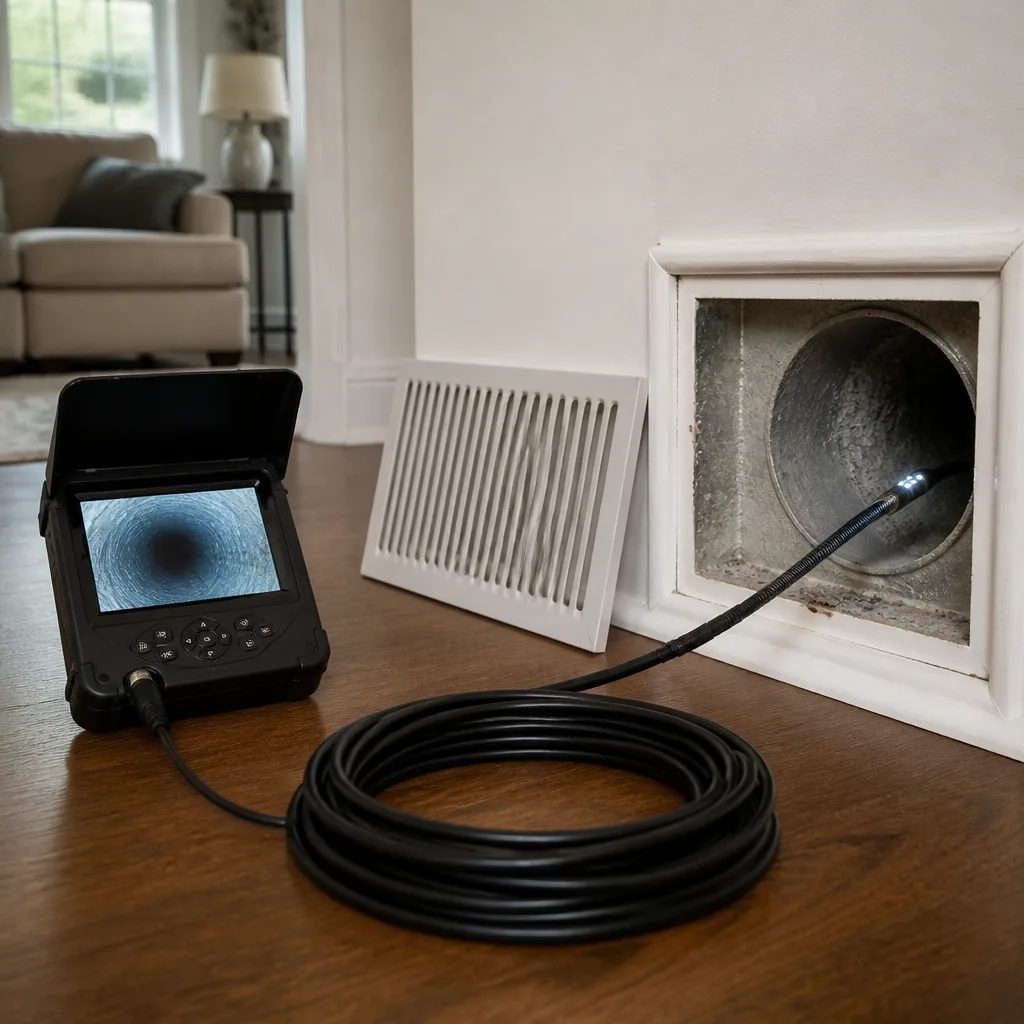 Camera inspection
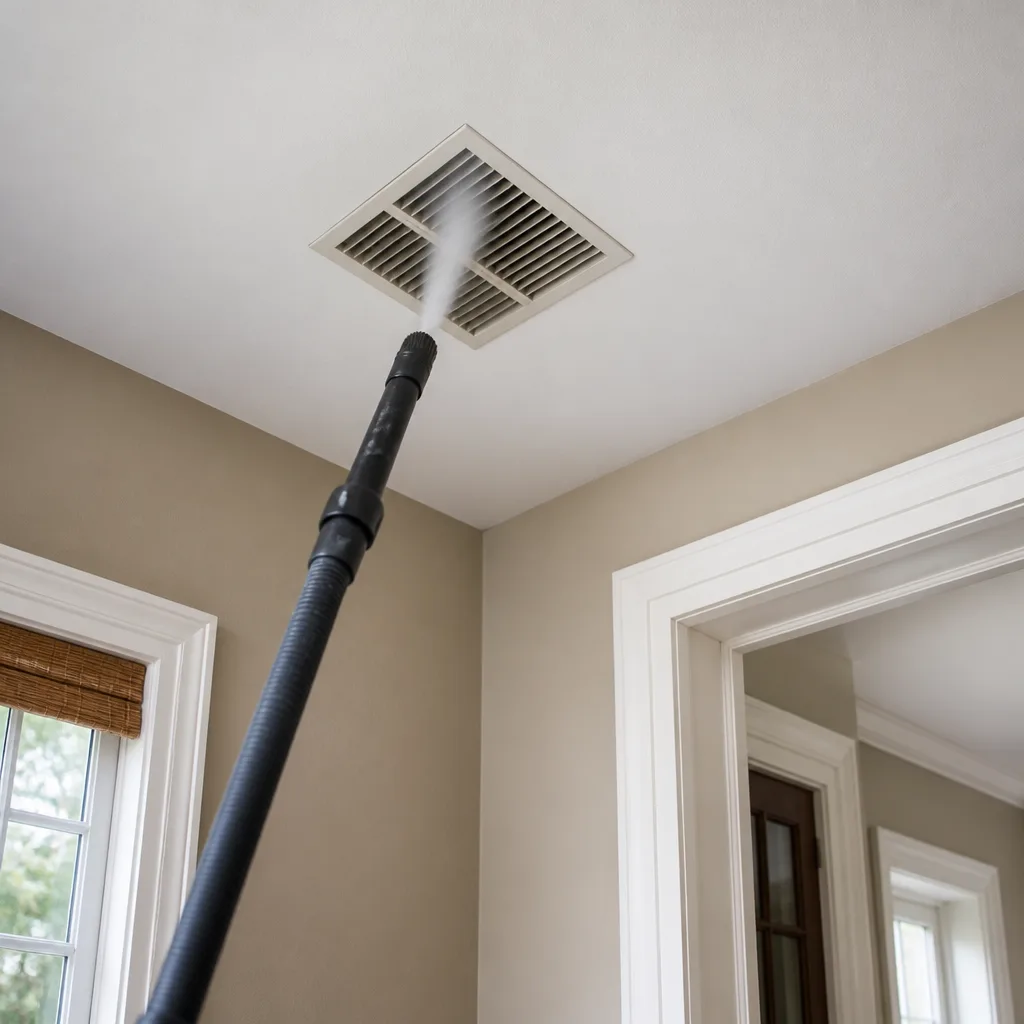 Sanitizing & deodorizing
Whole-system duct and dryer vent check with before-and-after photos - you see exactly what came out of your vents
That "$99 whole-house special" is a bait ad - the real number appears once they are in your hallway, or the "clean" is a shop-vac at the register. We photograph the inside of your ducts before and after instead.
Seasonal Air Duct Cleaning Care for Garden Grove: Year-Round Homeowner’s Guide
Most duct cleaning advice you’ll find online assumes four seasons: a cold winter, a muddy spring, a hot summer, a leaf-drop fall. Garden Grove doesn’t work that way. Our year splits along air quality lines instead, and each stretch stresses a duct system differently. The marine layer rolls in and holds moisture against the coast-facing neighborhoods for weeks. Wildfire smoke from inland and up the state drifts over the basin and settles. Santa Ana winds push dry particulate through every gap in a house. Then things calm down for a few months. If you’ve been ignoring your ducts on a once-a-year cycle, you’re maintaining them against the wrong calendar. This guide lays out what actually happens inside Garden Grove ductwork across the year and how to time service around it.
Quick Answer
Air ducts in Garden Grove should be cleaned on a schedule that tracks the region’s air quality events rather than the calendar year: a pre-summer cleaning before marine layer humidity peaks, attention after major wildfire smoke events, an assessment following Santa Ana wind episodes, and a lighter maintenance window in the stable January-to-April stretch. One annual cleaning misses the two or three points in the year when your duct system is working hardest and accumulating the most material.
Styles & brands we work with
- Whole-home duct cleaning
- Dryer vent cleaning
- Camera inspection
- Sanitizing & deodorizing
Table of Contents
- Why Garden Grove Has Four Air Quality Seasons, Not Four Weather Seasons
- The Marine Layer Window: What Pre-Summer Preparation Should Accomplish
- Wildfire Smoke Season: What Changes Inside Your Ducts
- Post-Santa Ana Protocol: Clean, or Just Swap the Filter?
- The Stable Months: What to Do January Through April
- How to Time Professional Service for Maximum Longevity
- What Professional Equipment Actually Removes
- Signs Your Ducts Are Overdue, Season by Season
Why Garden Grove Has Four Air Quality Seasons, Not Four Weather Seasons
Garden Grove sits in a coastal plain basin where the weather is mild enough that temperature barely changes what your HVAC system does. What changes is the air itself. If you’ve ever noticed that your house feels dustier in October than in February, or that a musty smell appears in June and fades by August, you’ve been observing this pattern without a name for it.
Here’s how the year actually breaks down for duct systems in Garden Grove:
- May through July – marine layer and mold risk. Cool, moist air pushes inland overnight and sits. Relative humidity climbs in the duct system, and any organic material already inside, dust, skin cells, pollen, pet dander, becomes a substrate for biological growth.
- August through October – wildfire smoke infiltration. Smoke from fires across the state and region drifts into the basin. Fine particulate (PM2.5) enters return-air pathways and coats duct interiors with a sticky, resinous film that ordinary dust doesn’t produce.
- October through December – Santa Ana particulate. Dry, gusty winds pick up soil, pollen, and debris and force it into every crack in the building envelope, including return ducting and filter housings.
- January through April – relative stability. Air quality settles. This is the quiet maintenance window when you can address damage from the previous year without a fresh load of contamination arriving weekly.
So when someone asks us whether they need annual duct cleaning in Garden Grove, the honest answer is that annual is a starting point, not a rule. The system’s actual exposure depends on which of these events hit hard that year and where in the city you are. A house closer to the coast sees more marine layer; a property on the eastern side catches more wind-borne particulate.
The Marine Layer Window: What Pre-Summer Preparation Should Accomplish
Pre-summer duct work in Garden Grove should be done before the humidity climbs, not after you notice a smell. Once moisture is high, cleaning is harder, drying takes longer, and any biological growth you disturb gets released into living space at exactly the wrong time.
What a properly timed pre-summer service accomplishes:
- Removes the accumulated substrate before humidity amplifies it. The dust sitting in your ducts in April is food. In July, with the marine layer holding moisture, it becomes a growing medium.
- Closes the pathways moisture uses to enter. Loose joints, disconnected flex runs, and unsealed plenum connections let humid air into the duct system. Duct repair and sealing before the wet season largely eliminates that entry point.
- Verifies that the air handler and coil aren’t holding moisture. A wet evaporator coil or a drain pan that isn’t draining fully becomes a biological reservoir. HVAC cleaning addresses the coil, housing, and blower so the whole system dries properly.
- Sets up filtration for the harder months ahead. If you run a Honeywell or Aprilaire filtration or purification component, late spring is when it should be checked and replaced so it’s working at full capacity by August.
- Sanitizes the duct interior where it’s warranted. Air quality sanitizing treatments make most sense applied to a clean duct system before the humid months, not layered on top of existing buildup.
The marine layer is a local fact, not a marketing angle. Garden Grove sits close enough to the coast that the overnight and morning cloud cover that pushes inland regularly keeps relative humidity high in the early part of the day through the summer. If you have duct leakage or buildup, that humidity finds both. Getting ahead of it is a lot cheaper than dealing with a musty odor and remediation later. For a whole-system assessment, air duct cleaning timed in spring is the more effective order of service than waiting until symptoms appear.
Wildfire Smoke Season: What Changes Inside Your Ducts
Wildfire smoke doesn’t deposit ordinary dust in a duct system. It deposits fine particulate with a resinous, oily quality that clings to surfaces and to the fibrous interior lining of flex duct. That difference matters because standard cleaning equipment set up for household dust doesn’t remove it as effectively.
What actually happens when a smoke event pushes through Garden Grove:
- PM2.5 particles bypass standard filters. Particles in this size range are small enough to pass through many common filter grades and lodge in duct lining, coil fins, and blower housings.
- The residue is sticky, not dry. It doesn’t blow out easily. It builds a film on duct walls and on the evaporator coil that later captures ordinary dust and holds it.
- Smoke odor persists after the air clears. The smell coming from vents weeks after a fire event is usually coming off residue inside the duct system, not from outside air.
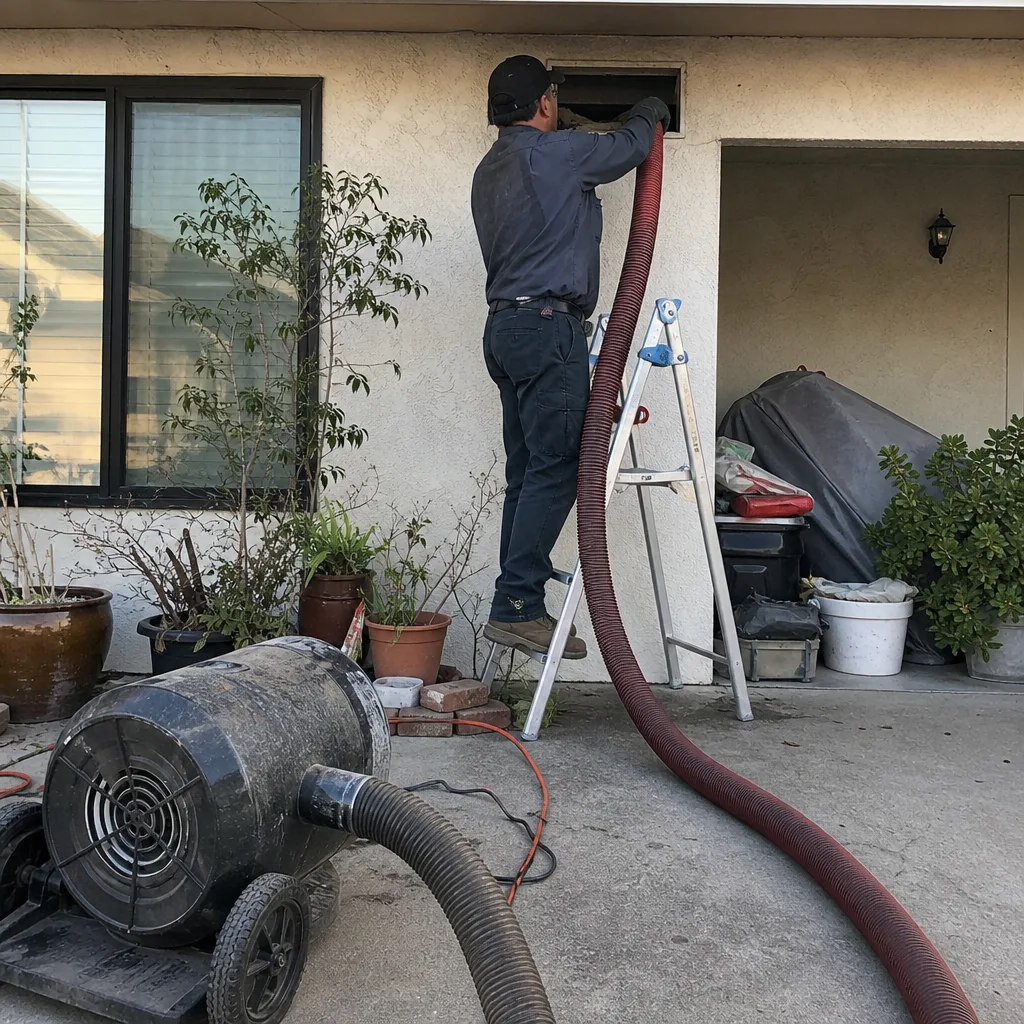
This is one of the areas where equipment choice actually matters. Professional-grade systems from Rotobrush and Nikro are built for controlled high-velocity agitation and capture, which is what smoke residue requires. Contaminant control equipment from Abatement Technologies is designed for environments where fine particulate containment is the priority. We bring that equipment class specifically because smoke exposure is a recurring event here, not a one-off.
If a significant smoke event has affected Garden Grove, a filter swap alone won’t deal with what’s already deposited. A professional cleaning with photographic before-and-after documentation shows you exactly what came out of your own system. That’s a different level of accountability than a technician telling you it looked dirty.
Post-Santa Ana Protocol: Clean, or Just Swap the Filter?
Not every Santa Ana wind event justifies a full cleaning. The right response depends on how much material actually got past the filter. Here’s the practical decision sequence we recommend:
- Check the filter first. If the filter is visibly loaded and the return grilles are clear, replacing it may be enough to restore airflow.
- Look at the return grilles and register faces. Visible dust buildup on grille faces and inside the return boot suggests particulate got past the filter.
- Watch for a change in how the house feels. A persistent dusty smell, visible dust settling on horizontal surfaces faster than usual, or a drop in airflow all point to accumulation in the system rather than at the filter.
- Consider how many events hit during the season. A single event with a fresh filter is usually a filter swap. Multiple wind events across October through December, especially following a smoke season, often justify a cleaning and an inspection of duct integrity.
- Check for damage, not just dirt. Santa Ana winds stress the building envelope, and that stress can loosen duct connections in attics and crawls. Duct repair and sealing addresses that damage, which filtration can’t.
The mistake we see most often in Garden Grove is reaching for a filter swap to solve a duct problem. Filters handle what passes through them. They don’t clean what’s already lodged in the system, and they don’t fix the leaks that let particulate in around them in the first place.
The Stable Months: What to Do January Through April
January through April is when the air settles in Garden Grove. Wildfire smoke is unlikely, Santa Ana winds ease, and relative humidity is moderate. This is the best window for work that takes time: inspection, repair, sealing, and thorough cleaning followed by sanitizing.
What to prioritize in this window:
- A full inspection of the duct system. Use this slower season to identify disconnected runs, crushed flex duct, leaks at the plenum, and joints that have failed over the previous year.
- Duct repair and sealing. Sealant cures and inspection can happen without new contamination arriving while the work is in progress.
- HVAC cleaning. The air handler, coil, and blower come apart for service without the urgency that comes in a hot or smoky month. HVAC cleaning in this window leaves the system in better shape for the load ahead.
- Air quality sanitizing. A clean system treated in spring stays clean longer when it’s sanitized before the humid season, not after.
- Dryer vent safety inspection. This is the year-round safety service that doesn’t depend on outdoor air quality at all. Lint accumulation in the vent line is a fire hazard regardless of season. Addressing it in the quiet months keeps it off the to-do list for the rest of the year.
The quiet window is also when most homeowners forget about their ducts entirely. That’s a mistake. Use the stable months to catch up on work so that when the marine layer, smoke, and wind arrive, you’re maintaining a clean system rather than trying to rescue a dirty one.
How to Time Professional Service for Maximum Longevity
The single biggest lever on how long a cleaning lasts is when it’s done relative to the events that load the system. In Garden Grove, the highest-value sequencing looks like this:
- Late March or early April – full cleaning and inspection. Clears the slate before the marine layer arrives. Pair it with duct repair and sealing so the system is airtight going into the humid months.
- Late April or early May – filtration and sanitizing. Confirm Honeywell or Aprilaire components are working correctly. Apply sanitizing treatment while the system is clean and dry.
- Mid-summer – filter checks, not full cleaning. Unless a specific event occurs, the system should hold from the spring service through the summer. Filter changes are the maintenance item here.
- October or November, after major smoke events – professional cleaning and inspection. This is the second cleaning of the year when the season calls for it, targeting smoke residue before Santa Ana winds add another layer.
- Post-event assessment after severe wind. Sometimes this is a filter change. Sometimes it’s a duct inspection. Sometimes it’s a full cleaning. A professional assessment determines which.
That structure means two professional touchpoints in a heavy smoke year and one in a light year. It’s not the annual-cleaning model most guides describe, and it’s the one that fits Garden Grove’s air quality reality. Professional cleaning systems from Rotobrush and Nikro are built to handle this frequency without damaging duct lining, which matters if you’re cleaning more than once a year.
What Professional Equipment Actually Removes
Homeowners often ask why they can’t handle duct maintenance with a shop vacuum and a long hose. The honest answer is that consumer equipment and professional equipment do different jobs. A shop vac pulls loose surface dust from the first few feet of the run. It doesn’t reach the length of a duct, it doesn’t agitate the material bonded to the duct walls, and it doesn’t contain what it loosens.
What professional-grade systems do differently:
- Negative-pressure containment. As material is agitated, the vacuum and containment system capture it and keep it out of living space. That’s not just a convenience; it’s the reason a cleaning doesn’t make air quality worse before it gets better.
- Rotary agitation that reaches the full run. Rotobrush and Nikro systems use mechanical agitation designed to break loose material that has bonded to the duct wall, including smoke residue that a passive vacuum won’t pull.
- Component-level cleaning. The coil, blower, and air handler housing accumulate material that a duct-only cleaning leaves in place. HVAC cleaning as a distinct service exists for this reason.
- Contaminant control for sensitive environments. Abatement Technologies equipment is a different class of gear, aimed at keeping fine particulate contained throughout the cleaning process.
- Protective treatment after cleaning. Guardsman-grade treatments can be applied as part of sanitizing to leave the duct interior protected.
None of this is about equipment for its own sake. It’s about the specific problem that smoke and marine layer conditions create: fine material bonded to surfaces over long runs. Only the right equipment category actually removes it. For dryer vent work specifically, dryer vent cleaning addresses a fire risk that no amount of air filtration solves.
Signs Your Ducts Are Overdue, Season by Season
What “overdue” looks like in Garden Grove changes with the season. Here’s what to watch for month by month:
- May through July: musty or damp odor when the fan kicks on, increased indoor humidity even with the AC running, visible dark spotting at register faces.
- August through October: lingering smoke smell weeks after regional fires clear, a visible film on return grilles, headache or eye irritation in sensitive household members that resolves when away from home.
- October through December: dust settling faster than usual, visible particulate at return boot openings, unexplained increase in filter loading frequency.
- January through April: the best time to inspect proactively, since symptoms are often less obvious. Look for loose duct connections, crushed flex runs, and dust patterns around ceiling registers.
- Every season: a dryer taking longer than it used to, higher operating temperature at the back of the dryer, or visible lint around the vent line – schedule an Air Duct Cleaning Garden Grove Pros assessment to check the dryer vent line before the lint becomes a fire hazard.
One or two of these signs is a cue to book an inspection. Several together, especially following a smoke or wind event, usually means the system is carrying more material than the filter alone can manage.
Common Mistakes to Avoid
- Following the annual-cleaning rule. An August cleaning in Garden Grove cleans the system right before two more loading events hit it. Spring cleaning with a post-event follow-up is the better pattern.
- Cleaning the ducts and ignoring the air handler and coil. The coil and blower hold material that duct cleaning alone leaves behind. HVAC cleaning belongs in the same service visit or right after.
- Skipping duct repair and sealing. A clean system with leaks pulls unfiltered air from the attic or crawl back into the supply side. Sealing is what makes a cleaning last.
- Treating the filter as the entire answer. Filters catch what reaches them. They don’t clean bonded material inside the system or fix the leaks around the filter housing.
- Using a shop vac for a duct problem. Consumer equipment agitates material that then settles in the room. Professional equipment contains it as it’s removed.
- Ignoring the dryer vent because it’s not a seasonal air quality problem. Dryer vent lint is a year-round fire risk and should be checked separately from air quality work.
- Sanitizing a dirty system. Sanitizing treatments applied on top of existing buildup don’t accomplish what they’re meant to. Clean first, then treat.
See the difference
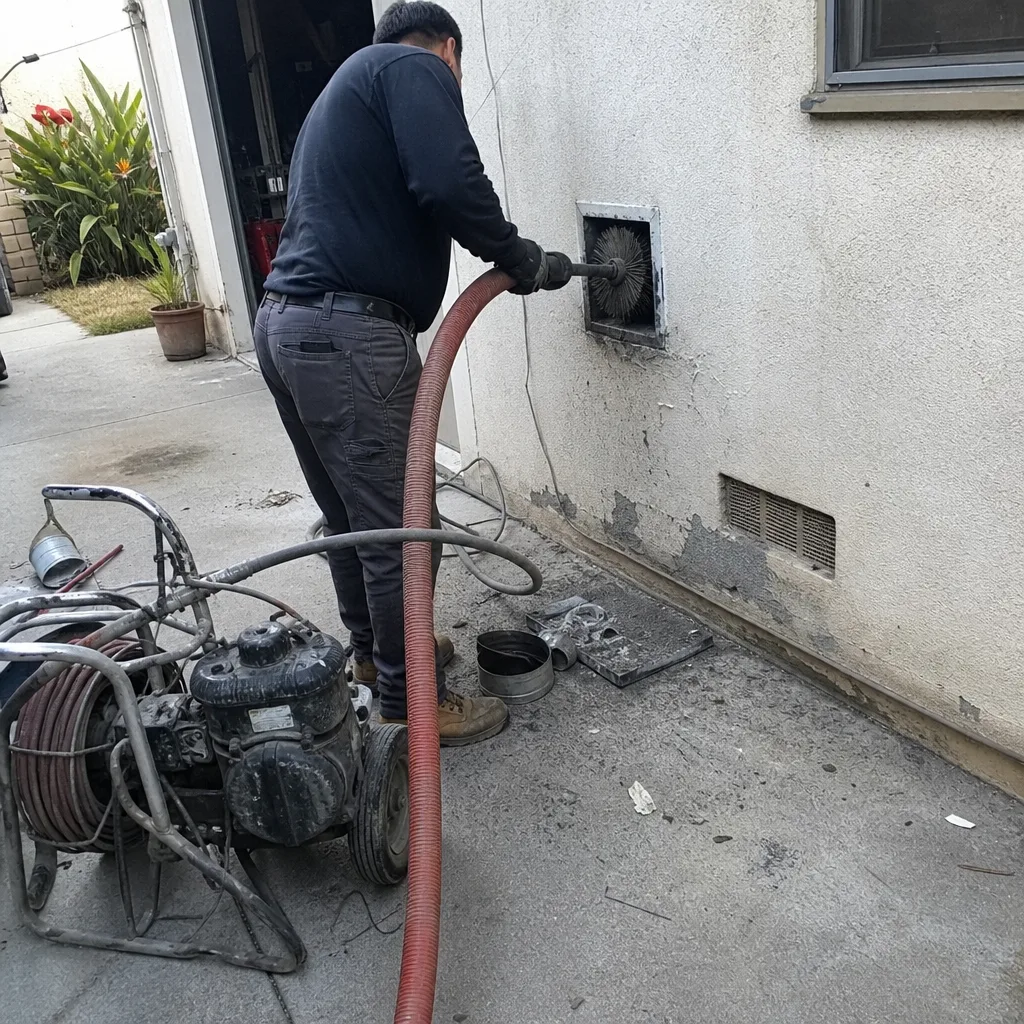 Before
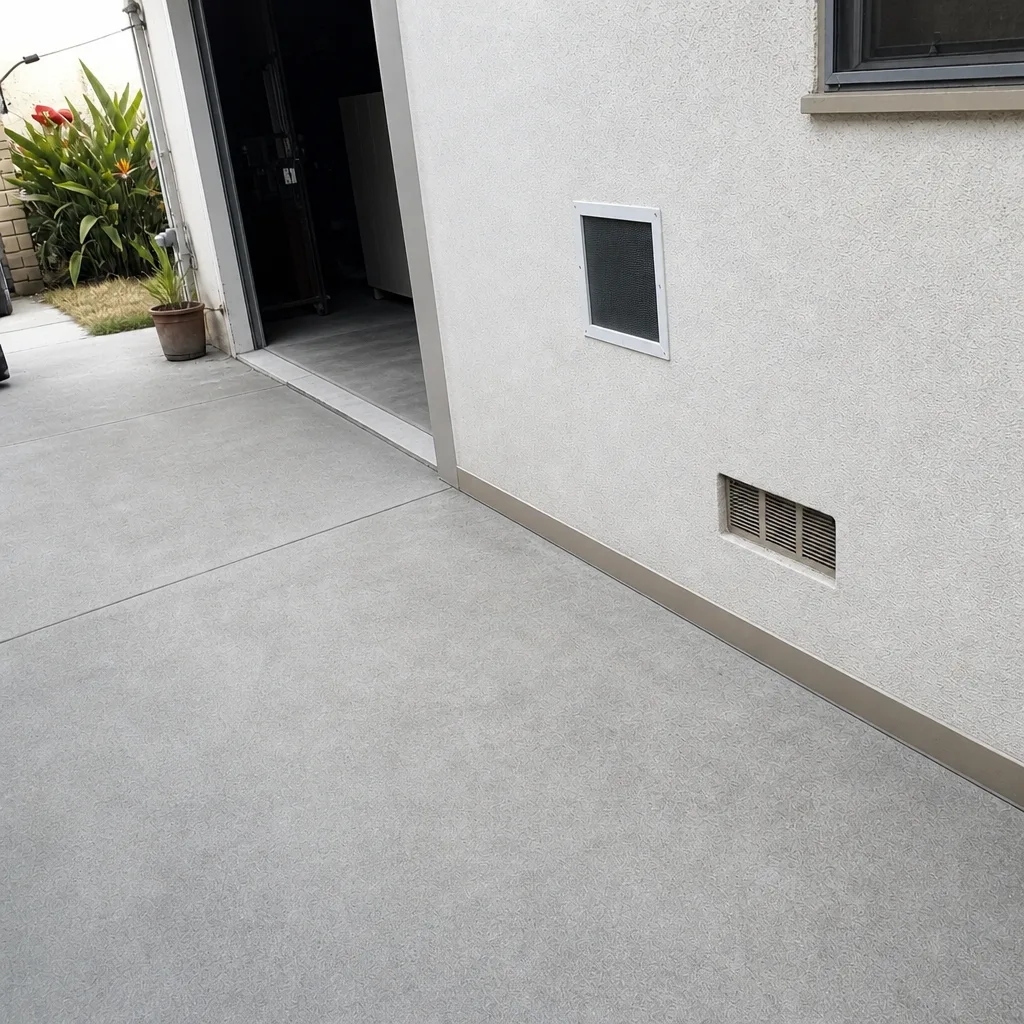 After
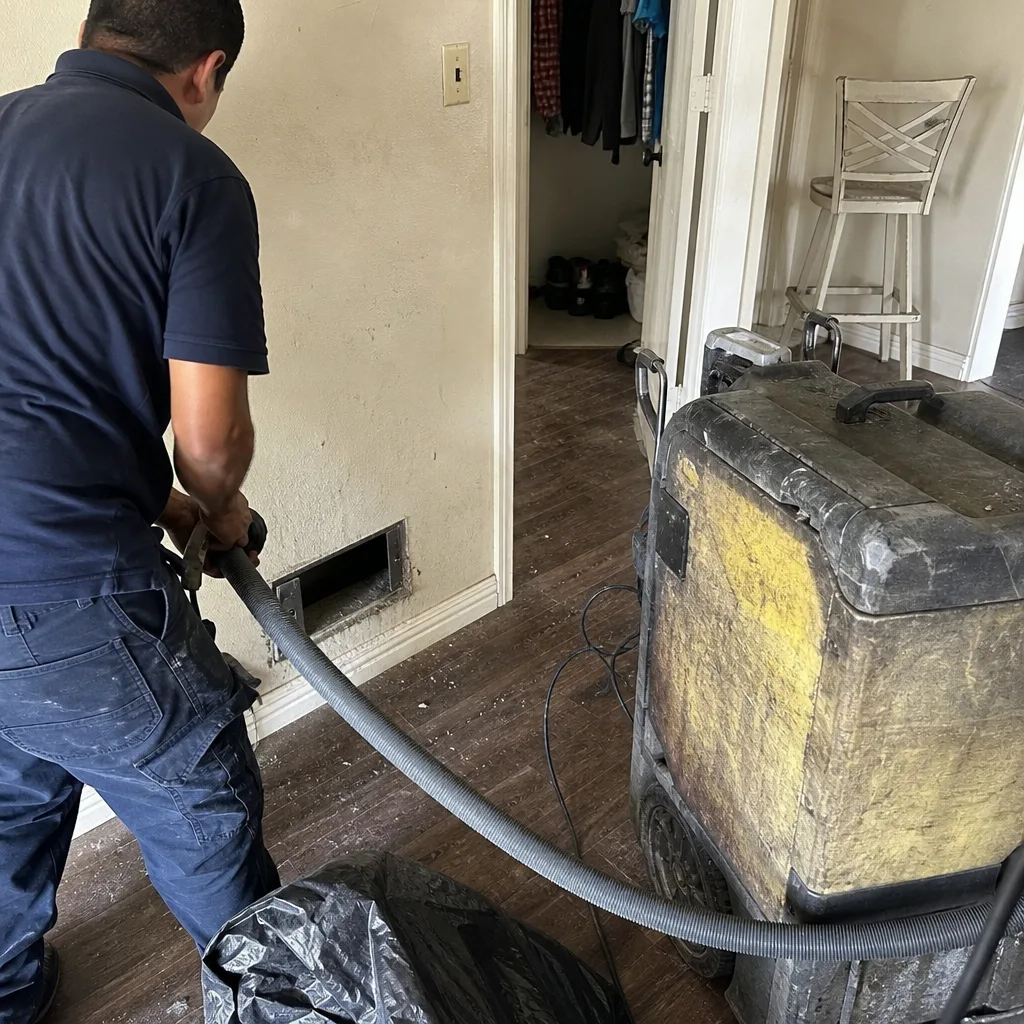 Before
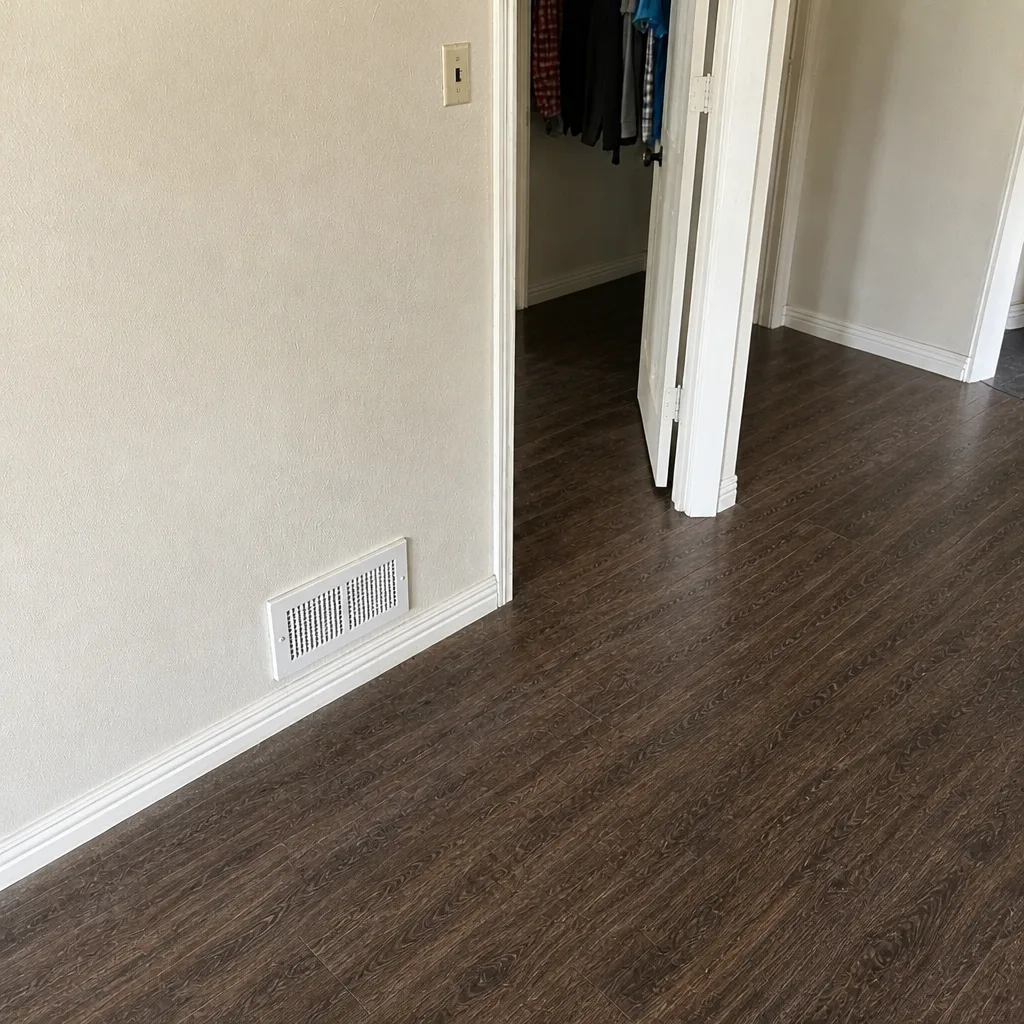 After
 Before
 After
When to Call a Professional
Schedule a professional inspection if you notice any of the following in your Garden Grove home: musty or smoke odor coming from vents, visible dust buildup at return grilles, seasonal allergy symptoms that improve away from home, recent duct damage from winds or construction, a dryer that’s taking longer than it used to, or a system that hasn’t been inspected in the last twelve months. If your home has had a major smoke or wind event nearby, an assessment after the event is worth the call, even if you’re not sure whether full cleaning is needed.
Our technicians have up to 12 years of experience with duct systems in the Garden Grove area, working with professional-grade equipment and a full-system approach that covers cleaning, repair, sealing, sanitizing, and dryer vent safety in one plan. Air Duct Cleaning Garden Grove Pros offers free estimates in Garden Grove. Call (877) 792-6315. We answer 24/7. Fast dispatch from 7am to 7pm, Sunday through Friday.
Frequently Asked Questions
For most Garden Grove homes, we recommend a full cleaning in spring before the marine layer arrives, plus a follow-up cleaning after major wildfire smoke events, which in a heavy year means two cleanings. In a light year, one spring cleaning with a filter check mid-season is usually sufficient. The determining factor is how much smoke and wind exposure your specific property saw that year, not the calendar alone. Call (877) 792-6315 for an assessment – estimates are free.
A musty smell when the AC kicks on usually points to biological growth on the evaporator coil, in the drain pan, or in duct lining where marine layer humidity has kept the system moist. The fix is a cleaning of both the ducts and the air handler, plus a sanitizing treatment afterward. Filter changes won’t solve it. Call (877) 792-6315 to book an inspection – estimates are free.
Yes. Fine particulate in the smoke is small enough to pass through many common filter grades and deposit in duct lining, on coil fins, and in blower housings, leaving a resinous residue that clings to surfaces. Standard surface cleaning doesn’t remove it. Professional equipment designed for fine particulate containment is what deals with it properly. Call (877) 792-6315 for an assessment after a major smoke event – estimates are free.
No. A single moderate event with a fresh filter in place often only calls for a filter change. Cleaning becomes the better call after multiple events across the season, when visible dust deposits appear at return grilles, or when a drop in airflow suggests accumulation in the system rather than at the filter. An inspection determines which route is right. Call (877) 792-6315 – estimates are free.
Duct cleaning removes material from the duct runs and registers. HVAC cleaning addresses the air handler, evaporator coil, blower, and drain pan. Air quality sanitizing applies a treatment to a clean system to leave it protected. Each handles a different part of the system, and all three together is what a full-system service covers. Dryer vent cleaning and duct repair and sealing round out the five services we offer. Call (877) 792-6315 to talk through what your home actually needs – estimates are free.
Dryer vent cleaning addresses a leading cause of residential house fires, and it’s separate from air quality work because the risk is lint accumulation in the vent line rather than duct contamination. If your dryer takes longer than it used to, feels hot at the back, or lint accumulates around the vent, the line needs checking. Call (877) 792-6315 to schedule it – estimates are free.
The Bottom Line
The one thing to take away from this guide is that Garden Grove’s air quality seasons, not the calendar year, should drive your duct maintenance schedule. A spring cleaning before the marine layer arrives, a post-event cleaning after major smoke, a thoughtful assessment after wind events, and dryer vent checks throughout the year will keep your system working better and hold off the effects of smoke, humidity, and wind on your indoor air. Annual cleaning alone misses the moments when the duct system is loading fastest. Get an honest assessment for your specific home, and time the work accordingly. Call (877) 792-6315. We answer 24/7. Fast dispatch from 7am to 7pm, Sunday through Friday. Estimates are free.
Written by the team at Air Duct Cleaning Garden Grove Pros.